Best Apps Learning to Read: Top 12 Picks for 2025
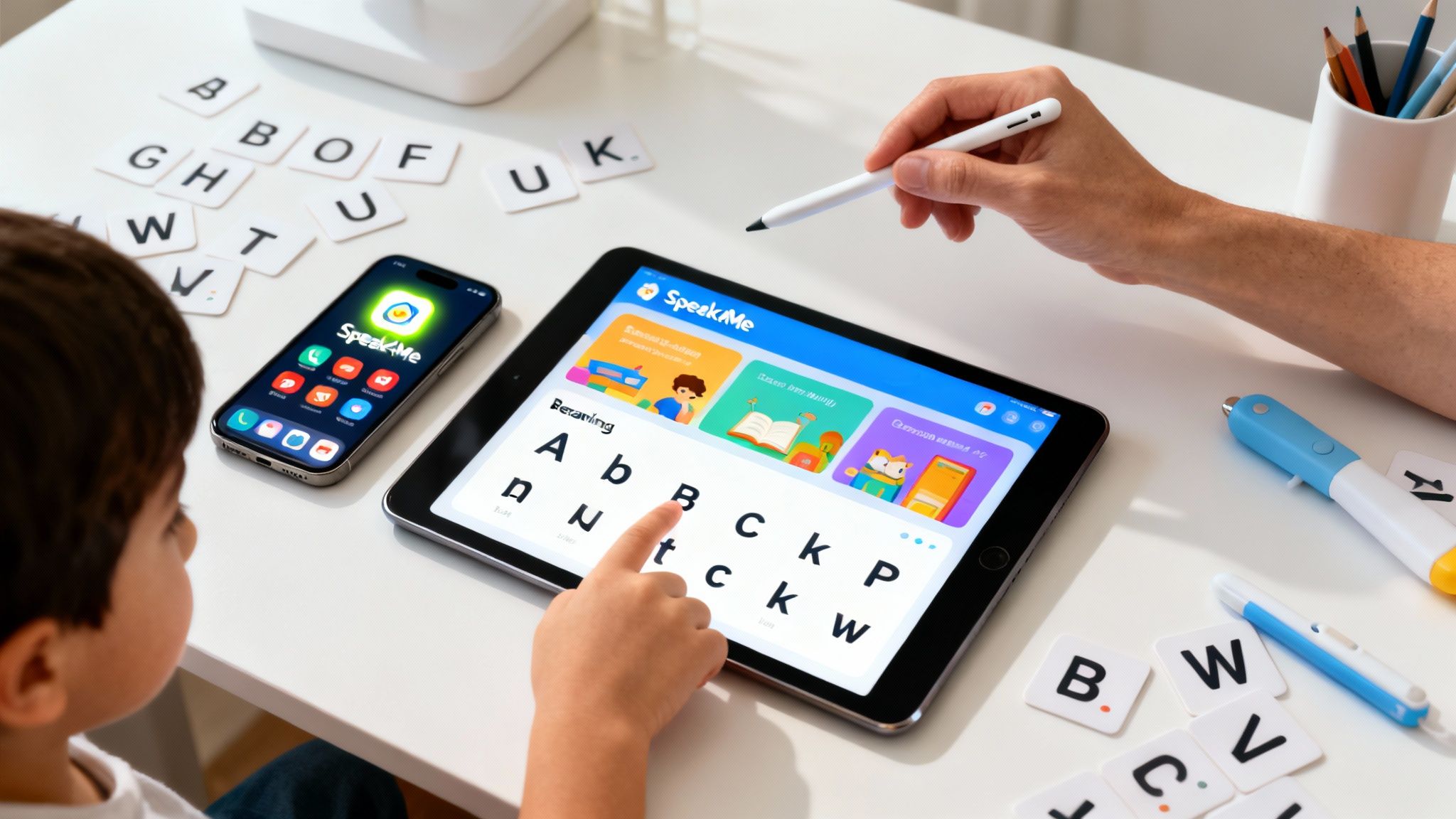
Finding the right tools can transform the journey of learning to read from a challenge into an exciting adventure. Whether you're a parent supporting a young child, an educator seeking classroom resources, or an adult looking to improve reading skills, the digital marketplace offers a wealth of options. This guide cuts through the noise to highlight the best apps for learning to read, focusing on features that genuinely support different learning styles and needs.
We'll explore everything from phonics-based games to advanced text-to-speech platforms that assist with comprehension and accessibility. For instance, tools like Speak4Me offer powerful support for learners with dyslexia or visual impairments by converting written text into clear audio, making content accessible to everyone. Our goal is to provide a clear, practical roadmap to help you choose the most effective app. Download Speak4Me free on iOS to see how text-to-speech can support your reading journey.
Each option is reviewed with its specific strengths, potential limitations, screenshots, and direct download links. We analyze how each app functions in real-world scenarios, so you can make an informed decision. As technology continues to enhance learning, a wider view can also be beneficial; for a look at how artificial intelligence is changing the classroom, check out this guide on the Top AI Tools for Educators. This article will give you the detailed comparisons needed to find the perfect reading app and unlock success.
1. Speak4Me
Speak4Me solidifies its position as a top-tier choice for a text-to-speech app by offering a powerful suite of accessibility-first features. It transforms nearly any written text, from web pages and PDFs to scanned documents, into high-quality, natural-sounding audio. This dual auditory and visual approach is exceptionally effective for developing reading skills, as it helps reinforce word recognition and improve comprehension for learners of all types.

What truly sets Speak4Me apart is its innovative ChatWithMe feature. This tool allows users to ask questions directly about an uploaded document and receive concise, AI-generated answers or summaries. For students tackling complex texts, this function is a game-changer, enabling them to clarify concepts or review key points instantly and then listen to the responses on the go.
Key Strengths and Use Cases
Comprehensive Input Support: Effortlessly import content from various sources. You can scan physical books with your device camera or connect to cloud services like iCloud, Google Drive, and Dropbox for seamless access to your digital library.
Support for Diverse Learners: The app is specifically designed to assist users with dyslexia, ADHD, and visual impairments. Features like adjustable playback speed (up to 2x) and a choice of natural voices (including Riley, Maya, and Zion) allow for a fully customized and comfortable listening experience.
Educational Commitment: Speak4Me demonstrates a strong commitment to education by offering its platform free for schools and educational institutions. This makes it an invaluable and accessible resource for creating inclusive learning environments.
Practical Considerations
While Speak4Me offers a robust free version for educational use, consumer pricing details for premium features are primarily available within the app store listing. Organizations that have strict data security requirements may need to contact the developer directly to verify compliance policies, as formal certifications are not published on the website.
Best for: Students, educators, professionals, and anyone with learning differences looking for one of the best apps for learning to read through a powerful text-to-speech and document analysis tool.
2. Apple App Store
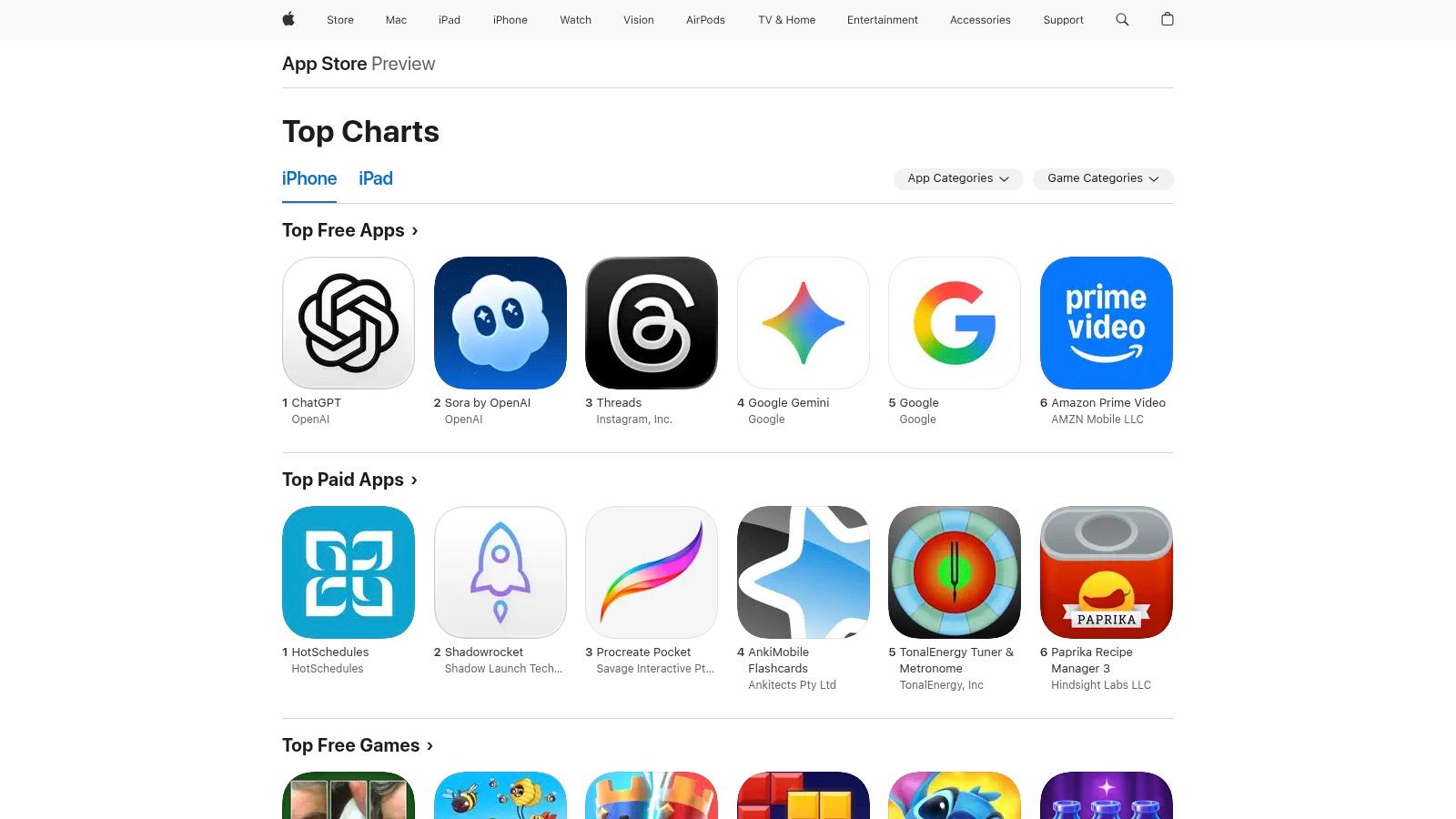
For parents with iPhones or iPads, the Apple App Store is the primary gateway to finding the best apps for learning to read. It's not a single app, but rather a curated marketplace where you can discover, purchase, and manage a vast library of educational tools. The platform excels in providing a safe and controlled environment for children to explore digital learning.
Why It’s a Top Resource
Apple's editorial team often creates "Collections" and stories that highlight high-quality apps, making it easier to find proven winners like Duolingo ABC, Khan Academy Kids, and Epic. For parents, its robust controls are a major advantage. Features like Family Sharing and Ask to Buy let you approve every download and purchase, while Screen Time helps manage how long your child uses the device. Clear privacy labels and age ratings also provide peace of mind. While the store offers many options, a versatile tool like Speak4Me can complement these apps by providing text-to-speech support for any content.
Pros and Cons
Pros: An extensive catalog of reputable literacy apps, strong safety and privacy features, and clear in-app purchase labeling.
Cons: The App Store is exclusive to Apple devices (iOS/iPadOS), so Android and Fire users are left out. Costs can also add up, as many top-tier apps require subscriptions.
Website: https://apps.apple.com/us/genre/ios-education/id6017
3. Google Play Store
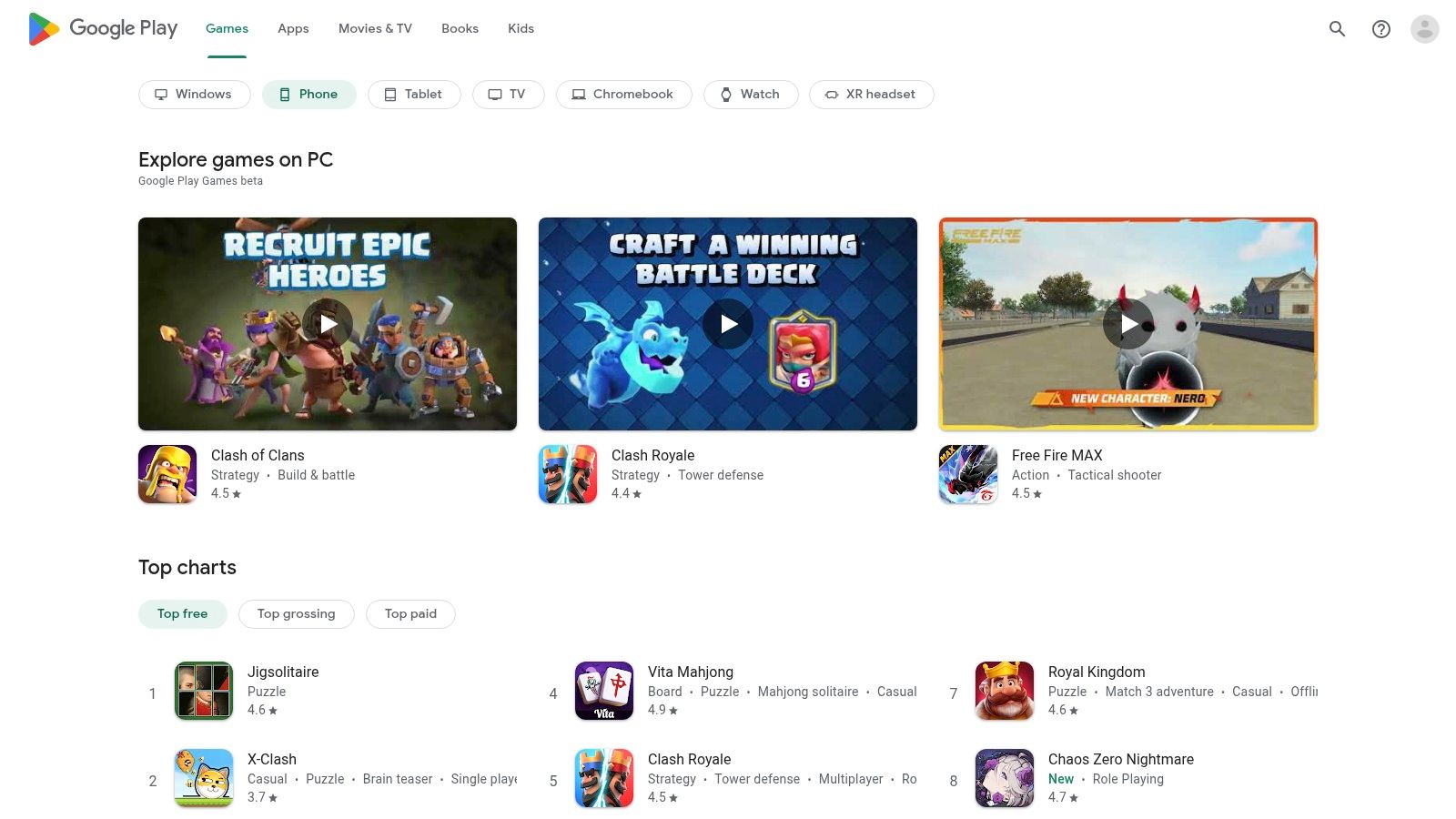
For Android users, the Google Play Store is the essential starting point for finding the best apps learning to read. Much like its Apple counterpart, it's a massive digital marketplace, but it stands out with features tailored specifically for families seeking high-quality educational content. Its "Kids" tab simplifies discovery, making it easy to browse apps on phones, tablets, and Chromebooks.
Why It’s a Top Resource
A key feature is the "Teacher approved" badge, which is given to apps vetted by academic experts for being age-appropriate, thoughtfully designed, and educationally valuable. This helps parents quickly identify trusted apps like Read Along by Google, Khan Academy Kids, and Epic. For those managing family devices, parental controls via Family Link and content sharing with Family Library are indispensable tools. App developers aiming to earn this trust can find that a solid Google Play Store Optimization guide is crucial for visibility.
Pros and Cons
Pros: A clear "Teacher approved" system for quality assurance, broad device compatibility across the Android ecosystem, and many free or freemium apps available.
Cons: App performance can vary due to Android hardware fragmentation, and the quality of apps without the "Teacher approved" badge can be inconsistent.
4. ABCmouse (Age of Learning)
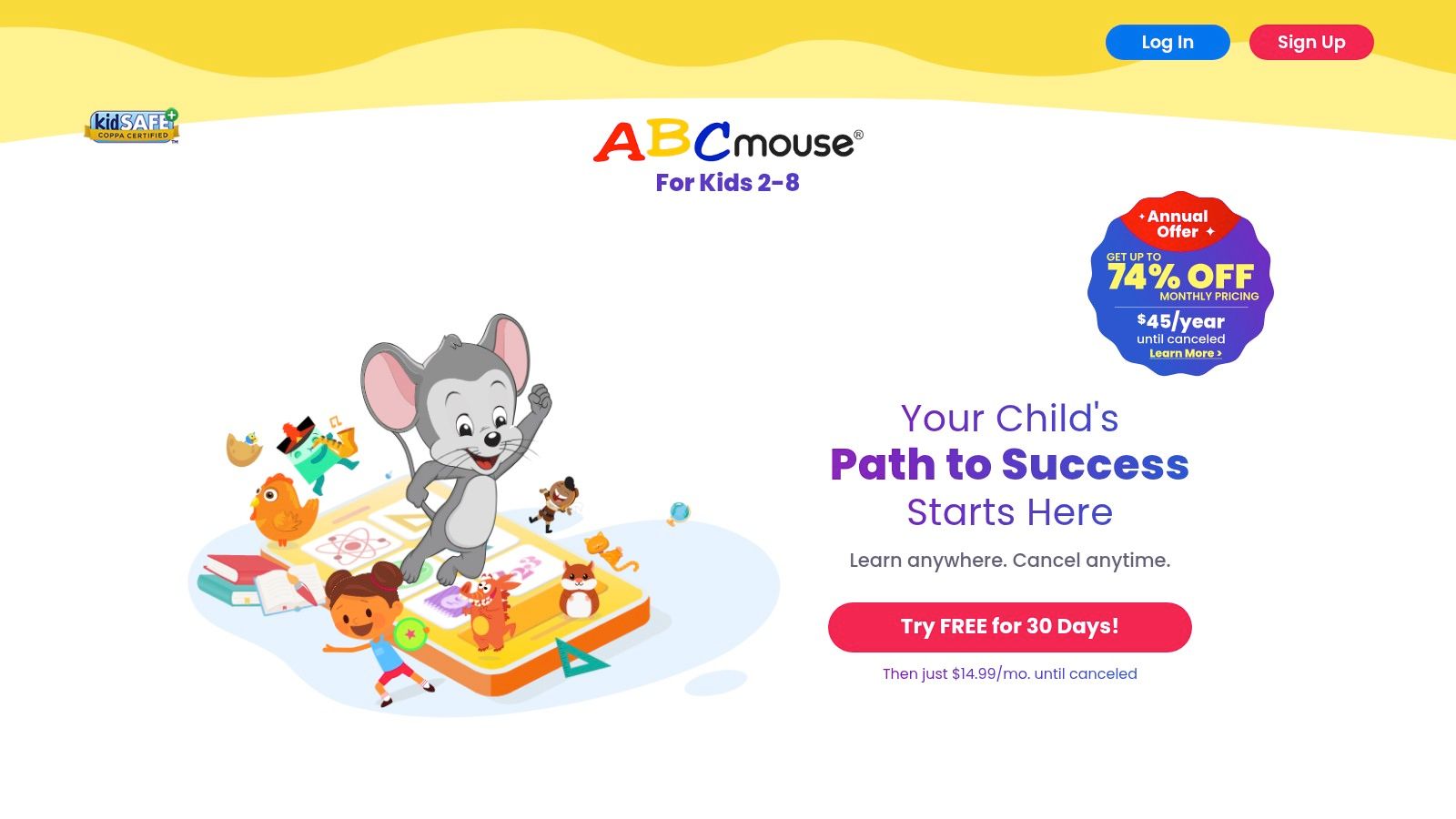
ABCmouse is a comprehensive early learning academy that offers a structured, step-by-step curriculum for children aged 2–8. Beyond just reading, it covers math, science, and art, making it a well-rounded educational platform. Its strength lies in the vast library of content and a clear learning path that guides children through foundational literacy skills like phonics, sight words, and eventually, reading full books.
Why It’s a Top Resource
With over 10,000 interactive activities, including games, books, puzzles, and animations, ABCmouse keeps young learners engaged for daily practice. The platform's progress tracking is a major advantage for parents, offering a detailed dashboard to monitor their child’s achievements and identify areas needing more focus. It also supports up to three child profiles, making it a great option for families with multiple young children. While ABCmouse provides a structured path, tools like Speak4Me can supplement this learning by helping kids sound out unfamiliar words they encounter in the leveled readers. Download Speak4Me free on iOS to add powerful audio support to your child's learning.
Pros and Cons
Pros: A very large content library ideal for daily practice, clear and structured learning paths, and a parent dashboard for tracking progress.
Cons: The best value is locked behind an annual plan, and its auto-renewing subscription policy can be inconvenient for some users.
Website: https://www.abcmouse.com
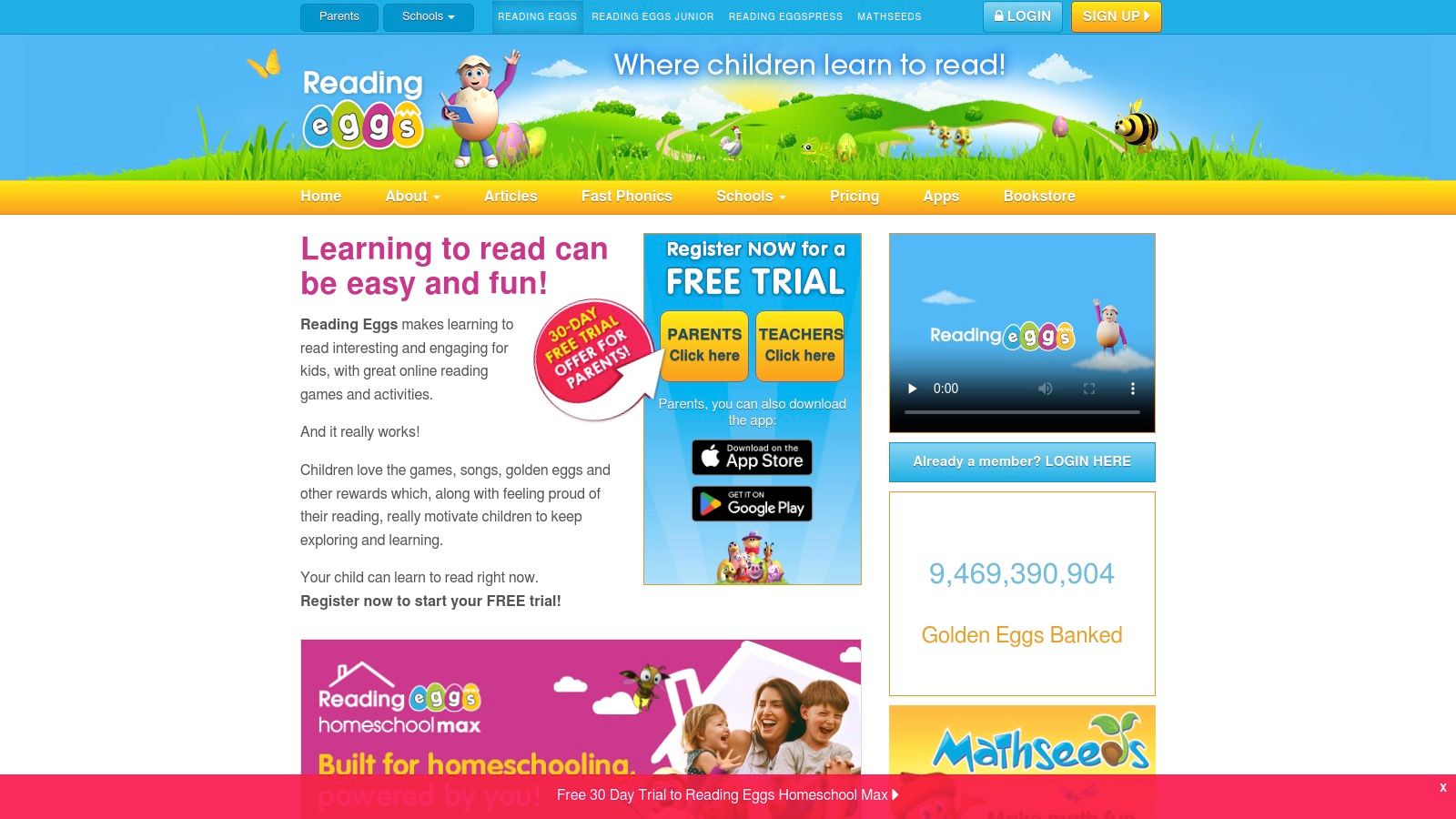
5. Reading Eggs
Reading Eggs is a comprehensive, multi-award-winning program designed to make learning to read a fun and motivational experience for children. It offers a structured path that takes learners from non-readers to confident readers through a series of self-paced lessons, interactive games, and engaging e-books. The platform is known for its structured phonics and reading maps that guide children through a progressive learning journey.
Why It’s a Top Resource
Reading Eggs stands out by offering an initial placement test to ensure each child starts at the appropriate level. As kids complete lessons, they earn rewards and unlock new levels, keeping them motivated. The parent dashboard provides detailed progress reports, making it easy to track a child’s development. With family plans that support multiple children and accessibility via web, iOS, and Android apps, it’s a flexible solution for households looking for one of the best apps for learning to read. For those seeking to go beyond basic reading, the platform offers resources to help your child how to improve reading comprehension.
Pros and Cons
Pros: Extensive curriculum covering pre-reading to comprehension, transparent family pricing with frequent free trial offers, and an excellent option for multi-child households.
Cons: The user interface can feel busy or overstimulating for some learners, and the comprehensive Homeschool Max bundle comes at a significantly higher cost.
Website: https://readingeggs.com
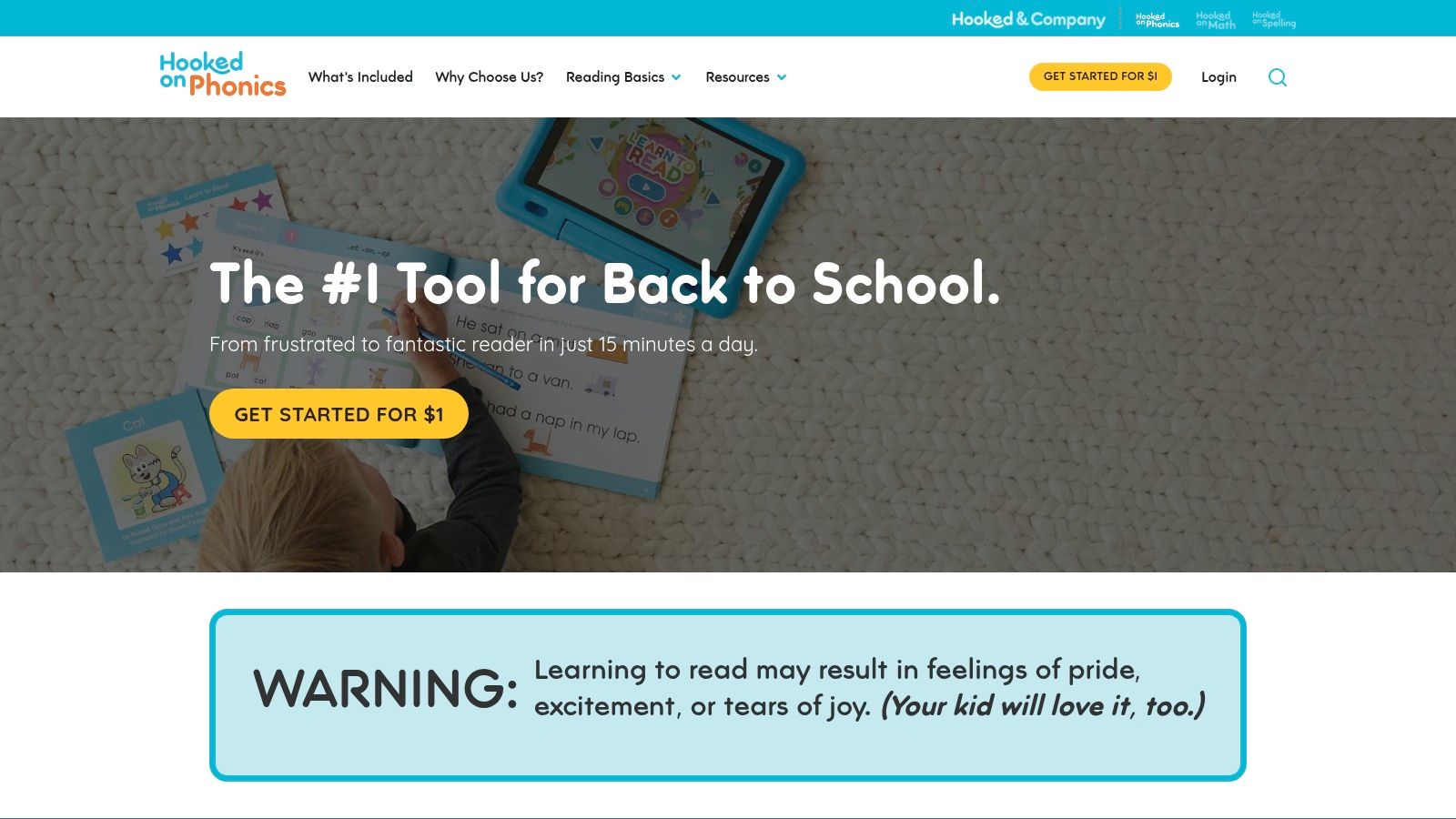
6. Hooked on Phonics
Hooked on Phonics is a classic name in early literacy that has successfully blended its proven system with modern technology. It offers a comprehensive program that combines a digital app with physical Practice Packs, including workbooks and storybooks, mailed directly to your home. This hybrid approach caters to different learning styles by reinforcing digital lessons with hands-on, tactile materials for children from Pre-K to early 2nd grade.
Why It’s a Top Resource
The program’s core strength lies in its synchronized learning path. Each digital lesson on the app corresponds directly to a lesson in mailed Practice Packs, creating a cohesive and structured experience. This makes it one of the best apps for learning to read for parents seeking a clear, step-by-step curriculum. The parent dashboard provides progress tracking for up to three children, while promotional trials, often just $1 for the first month, make it easy to try. While this structured approach is excellent, for learners who need more flexible auditory support on any text, a tool like Speak4Me can provide instant read-aloud assistance.
Pros and Cons
Pros: A powerful combination of digital and hands-on learning, strong brand reputation with a proven method, and physical books that match app lessons to build a child’s library.
Cons: Requires an ongoing subscription for full benefits, and shipping times for physical packs can introduce delays. App-only plans and purchase options vary across different app stores.
Website: https://www.hookedonphonics.com
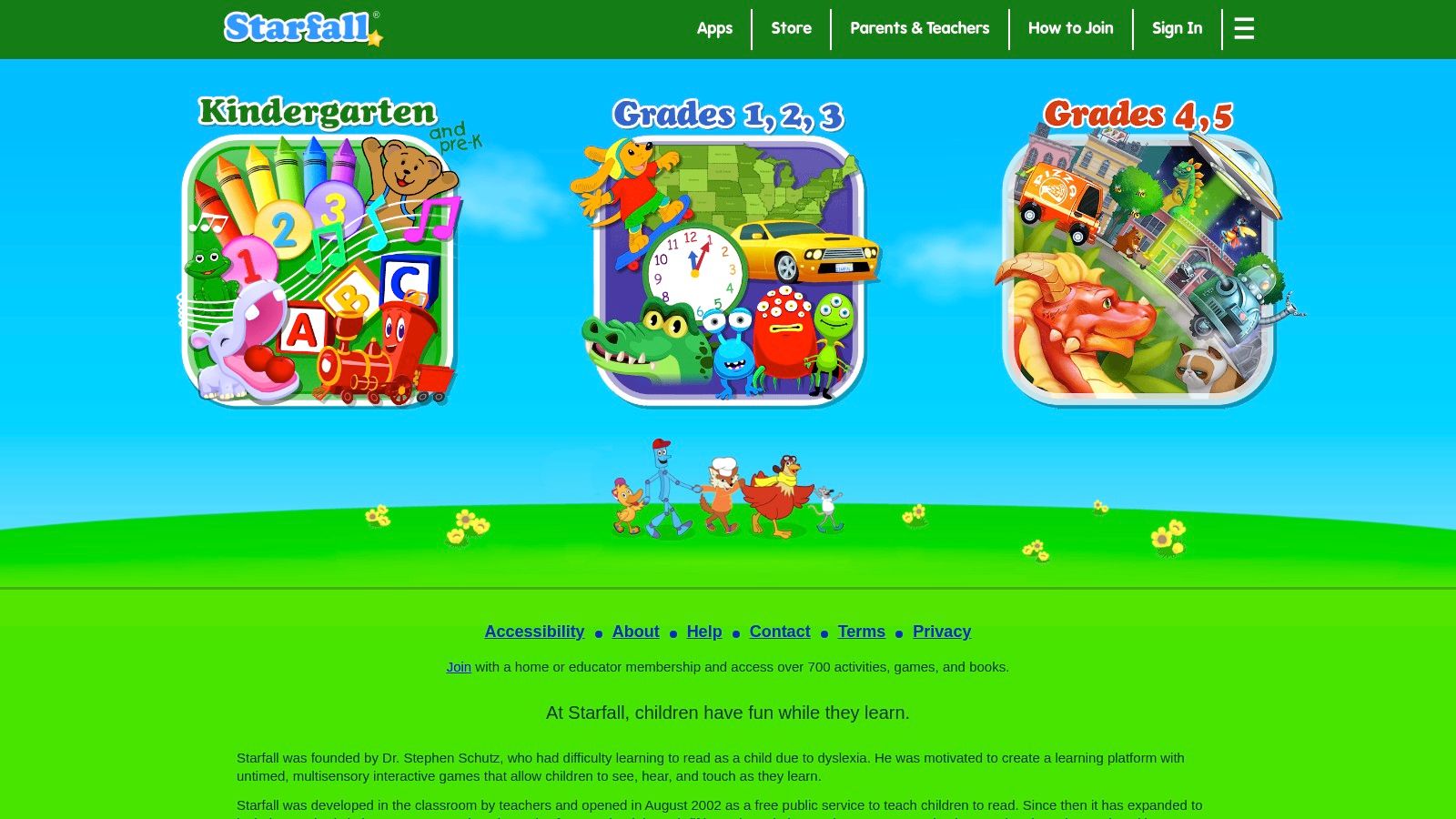
7. Starfall
Starfall has been a trusted, nonprofit resource in early literacy for decades, making it a foundational tool for parents seeking the best apps for learning to read. Its phonics-based approach uses engaging songs, interactive games, and simple stories to guide children from letter recognition to reading full sentences. The platform is designed for pre-K through third grade and is accessible on the web and through dedicated iOS and Android apps.
Why It’s a Top Resource
As a nonprofit, Starfall's primary mission is education, not profit. This is reflected in its ad-free environment and the significant amount of free content available without a login. For full access, its home membership is incredibly affordable, unlocking hundreds of additional activities. The interface is clean and kid-friendly, allowing young learners to navigate independently. Its focus on systematic phonics and decodable texts provides a solid, research-backed foundation for emergent readers.
Pros and Cons
Pros: Very affordable membership options, a safe and ad-free nonprofit platform, and a strong focus on foundational phonics skills.
Cons: The graphics and activities are simpler compared to newer, premium apps. It offers less adaptive technology to personalize the learning path.
Website: https://www.starfall.com
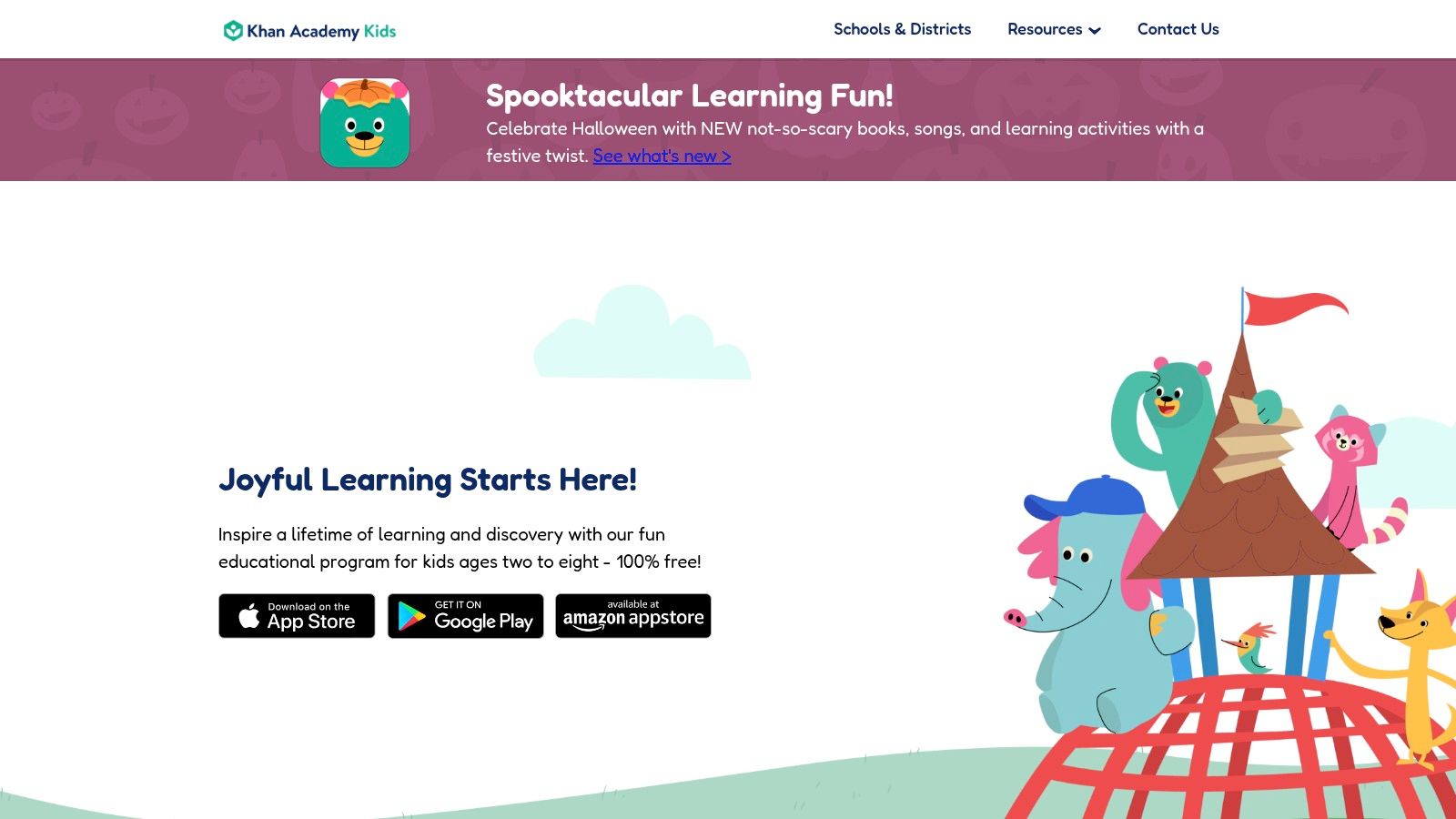
8. Khan Academy Kids
As a completely free, nonprofit-developed platform, Khan Academy Kids offers a high-quality, comprehensive early learning curriculum without ads or subscriptions. It stands out by providing thousands of activities, books, and games that cover not just reading but also math, social-emotional learning, and creative expression. This makes it one of the best apps for learning to read for families seeking an all-in-one educational tool at no cost.
Why It’s a Top Resource
The app’s reading pathway is aligned with established standards like Common Core and the Head Start Early Learning Outcomes Framework, ensuring a solid educational foundation. Kids can follow a personalized learning path or choose from a vast library of read-aloud storybooks and phonics games. For educators and parents, the inclusion of classroom tools for assigning lessons and tracking progress is a significant advantage, and offline access ensures learning can continue anywhere.
Pros and Cons
Pros: It is 100% free forever with no ads or in-app purchases. The content covers a broad range of subjects beyond literacy, and it includes robust tools for teachers and parents.
Cons: The learning path for reading is less linear than some dedicated phonics curricula. It also offers less printable or hands-on content compared to paid programs that blend digital and physical materials.
Website: https://www.khanacademy.org/kids
9. Teach Your Monster to Read
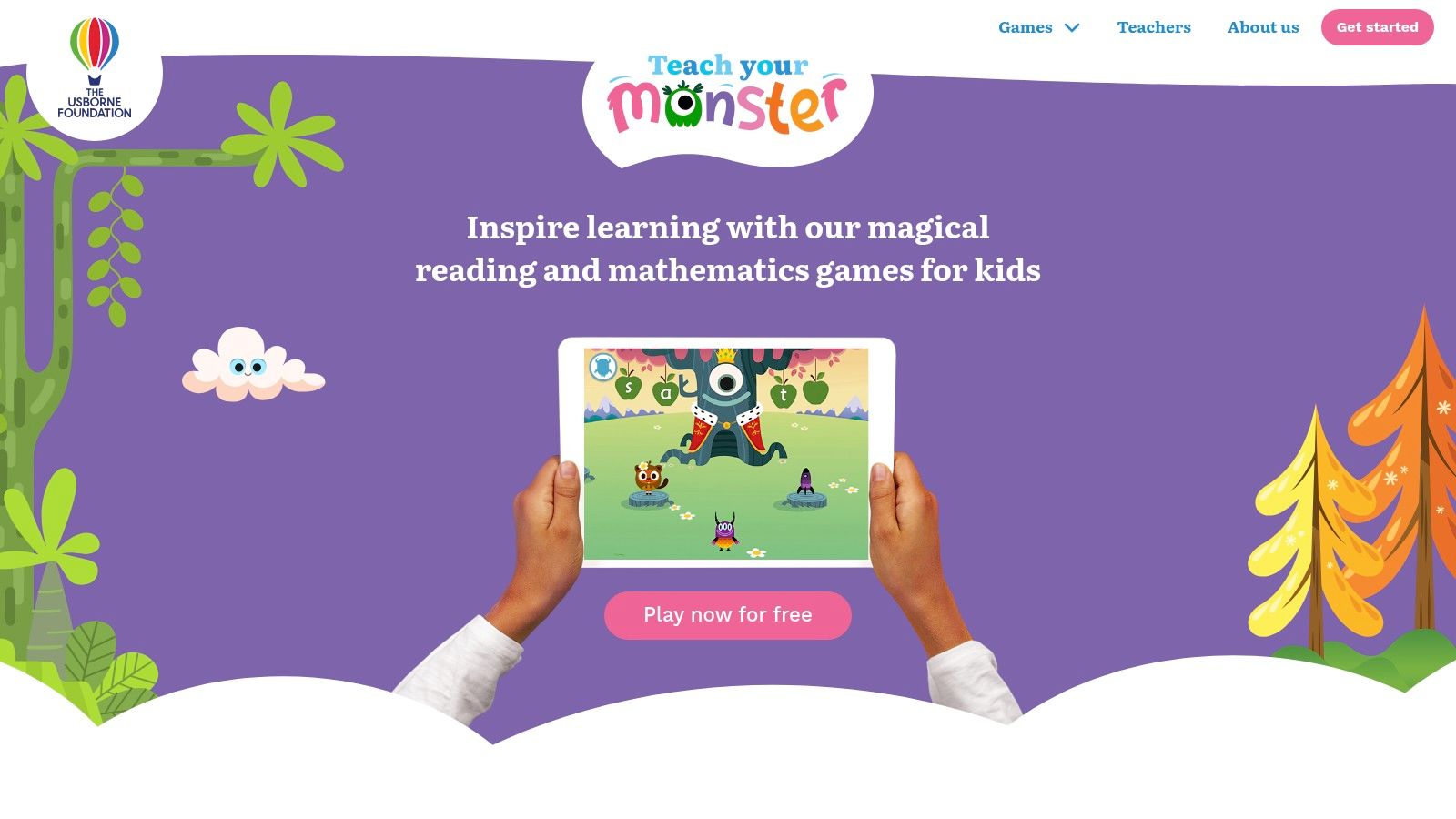
Teach Your Monster to Read is a series of award-winning games that makes learning to read a fun-filled adventure. Created by the Usborne Foundation, a nonprofit organization, this platform offers a playful, story-based approach to phonics. It guides children from their first letter sounds all the way to reading full sentences, making it one of the best apps for learning to read for early beginners.
Why It’s a Top Resource
Developed with literacy experts, this platform excels at turning foundational reading skills into an engaging quest. Children create their own monster and take it on a journey, practicing letters and sounds through a variety of mini-games. Its focus on phonics helps build strong phonological awareness, a critical step in literacy. The entire game series is completely free to play on its website, providing incredible value and accessibility for families and schools. This makes it an excellent, risk-free resource to support a child's reading journey.
Pros and Cons
Pros: The web version is entirely free, apps are a small one-time purchase with no ads, and the engaging gameplay is highly praised by parents and teachers.
Cons: App purchases are platform-specific and do not transfer between different app stores (e.g., Apple to Google).
Website: https://www.teachyourmonster.org
10. Epic (GetEpic)
Epic is less a structured lesson plan and more a massive digital library for kids. It offers on-demand access to over 40,000 high-quality e-books, audiobooks, and videos, making it an incredible resource for fostering a love of independent reading. For children who have grasped foundational skills, Epic provides the endless content needed to build fluency and comprehension.
Why It’s a Top Resource
Epic's strength lies in its vast and varied selection, which caters to every interest and reading level. The platform includes a "Read-To-Me" feature for many books, allowing early readers to follow along and associate spoken words with text. For families and educators, its tracking tools, reading logs, and achievement badges are excellent for motivating children and monitoring their progress. This makes it one of the best apps for learning to read through sheer volume and engagement.
Pros and Cons
Pros: An enormous library that encourages reading for pleasure, excellent motivational tools like badges, and a free tier for educators to use during school hours.
Cons: It functions more like a library than a step-by-step reading program, so it doesn't teach phonics directly. Full 24/7 home access requires a paid subscription.
Website: https://www.getepic.com
11. ReadingIQ (Age of Learning)
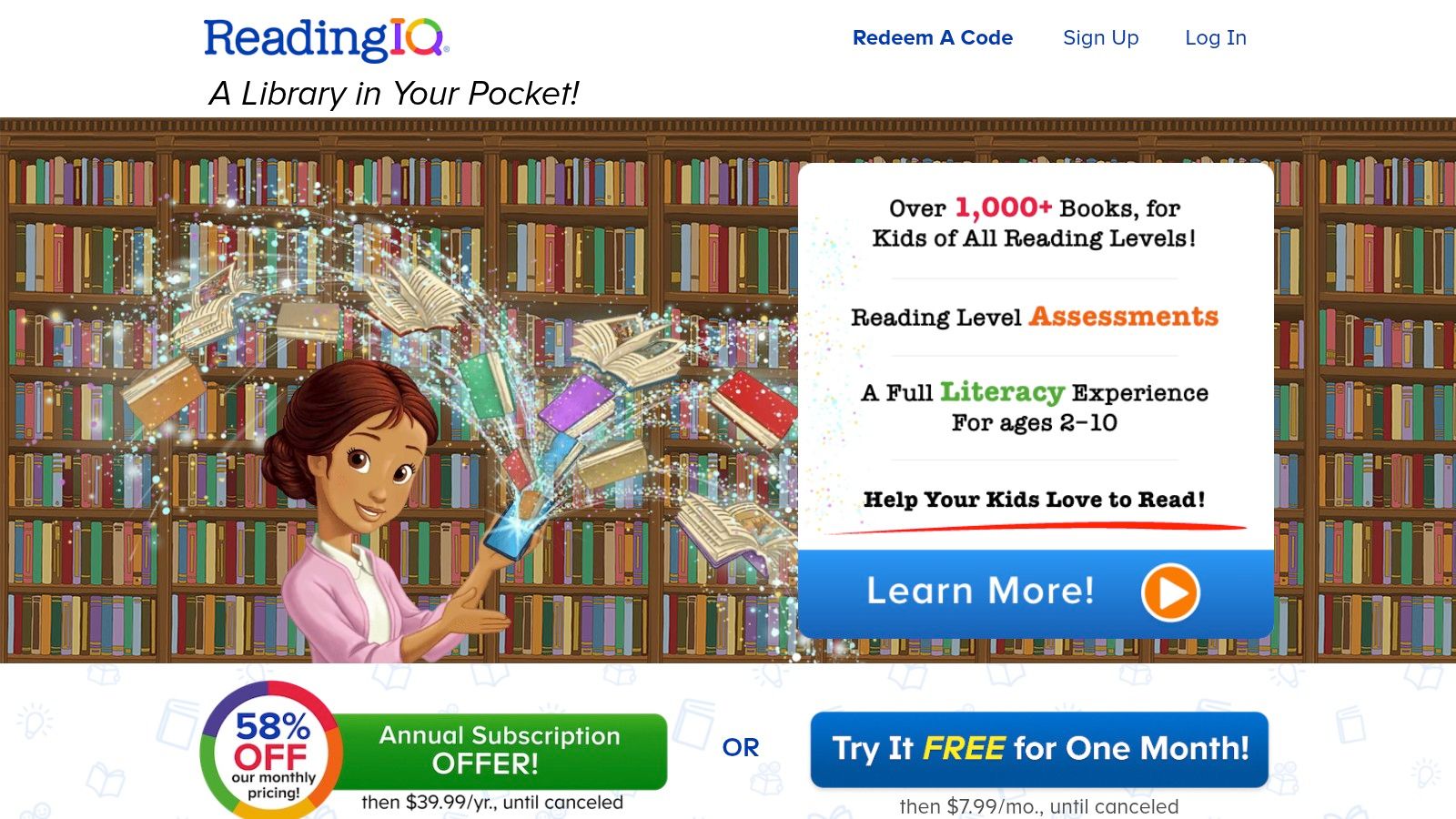
From the creators of ABCmouse, ReadingIQ is a digital library designed to grow with a child from ages 2 to 12. Its strength lies in providing a vast collection of leveled books that align with common school standards, making it an excellent companion to more formal phonics instruction. The platform focuses on building reading volume, stamina, and confidence by matching kids with books at their just-right level.
Why It’s a Top Resource
ReadingIQ stands out by organizing its library using recognized leveling systems like Guided Reading Levels (F&P) and Lexile measures. This makes it easy for parents and teachers to assign books that build skills without causing frustration. The platform includes read-to-me functionality for emerging readers and supports multiple child profiles, each with a personalized dashboard. For learners who need to transition from decoding to understanding, it's a great tool to find engaging content and improve their skills. Learn more about the best apps for reading comprehension to support this journey.
Pros and Cons
Pros: Low monthly cost with frequent free trial offers, pairs well with phonics curricula to increase reading practice, and is backed by a reputable publisher (Age of Learning).
Cons: The book catalog is smaller than competitors like Epic, and the app experience or content availability can vary depending on your device or region.
Website: https://www.readingiq.com
12. Common Sense Media
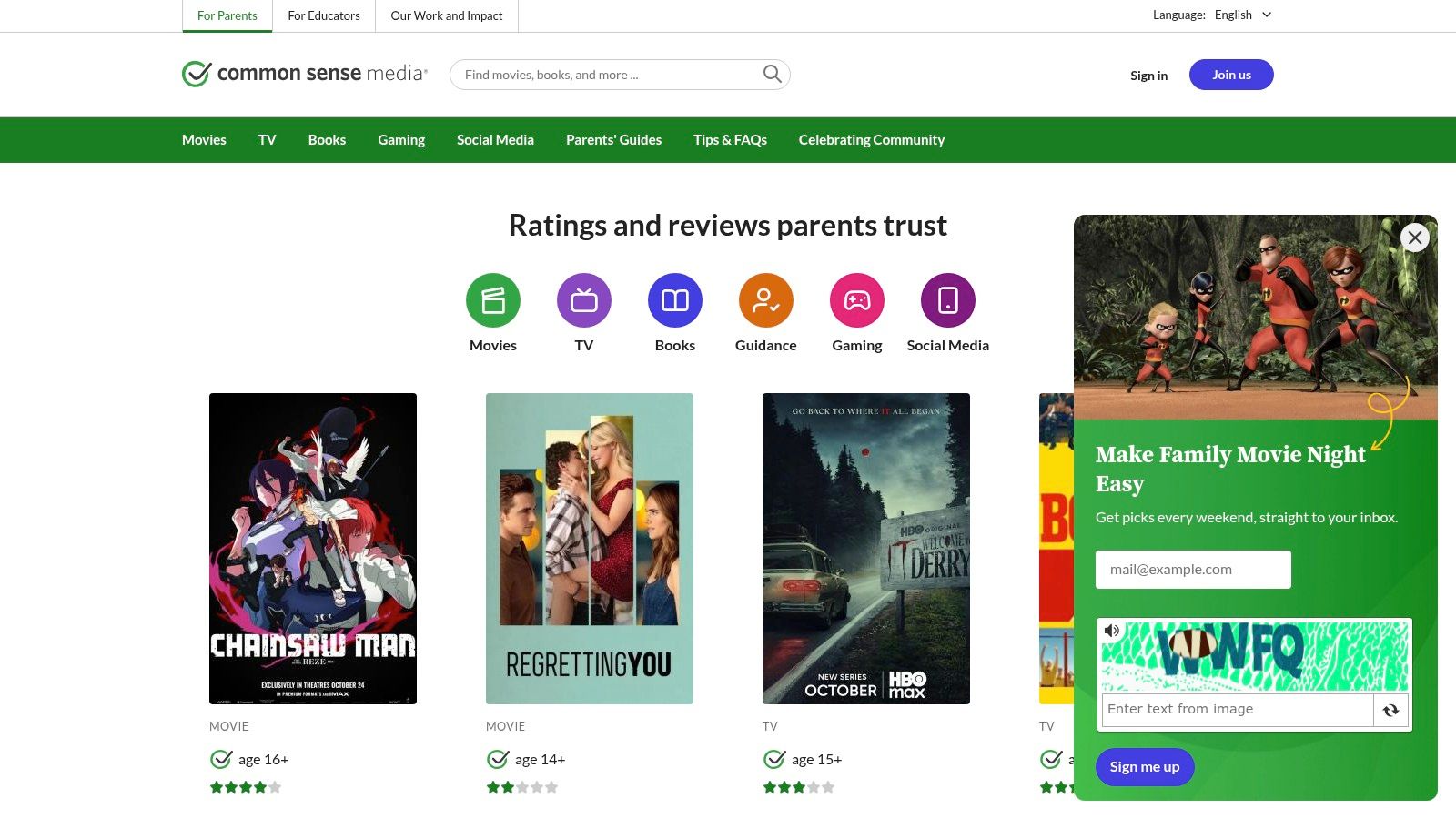
Before committing to a subscription, it’s wise to do some homework. Common Sense Media is a respected independent review site where parents can find curated, up-to-date lists of the best apps for learning to read, comprehension tools, and digital libraries. It serves as an excellent starting point for comparing options and shortlisting apps before you download or buy.
Why It’s a Top Resource
Common Sense Media provides unbiased, detailed reviews that go beyond marketing copy. Its age-based ratings and clear criteria help you quickly understand an app's educational value, ease of use, and privacy practices. You can filter recommendations by age, learning skill (like phonics or vocabulary), and price to find the perfect tool for your child's specific needs. Educators will also appreciate the classroom-focused resources available via Common Sense Education.
Pros and Cons
Pros: Unbiased and reliable reviews for shortlisting, powerful filters to find appropriate apps, and a great starting point for comparing tools.
Cons: It's a research hub that links out to app stores rather than offering direct downloads. Some reviews for niche apps can be brief.
Website: https://www.commonsensemedia.org
Top 12 Early Reading Apps: Feature Comparison
Product | Core features (✨) | UX & Quality (★) | Value & Price (💰) | Target & USP (👥/✨) |
|---|---|---|---|---|
Speak4Me 🏆 | ✨ TTS from web/PDF/scan, ChatWithMe doc Q&A, iCloud/Drive/Dropbox sync | ★ 4.6 — natural voices, adjustable up to 2x | 💰 Free for schools; consumer tiers in-app | 👥 Students, dyslexia/ADHD, pros, creators — ✨ Doc interrogation + accessibility |
Apple App Store | ✨ Editorial collections, parental controls, system accessibility | ★ High curation & trust | 💰 Free to browse; app prices/subscriptions vary | 👥 iOS users, parents, educators — app discovery & safety |
Google Play Store | ✨ Kids tab, “Teacher approved” badges, Family Link | ★ Varies by app/device; broad hardware support | 💰 Free to browse; app prices/subscriptions vary | 👥 Android/Chromebook users, teachers — teacher‑vetted discovery |
ABCmouse (Age of Learning) | ✨ Stepwise phonics curriculum, 10k+ activities, progress tracking | ★ Strong curriculum & parent dashboard | 💰 Subscription (best value annually) | 👥 Ages 2–8, families & schools — structured learning path |
Reading Eggs | ✨ Placement tests, leveled e‑books, rewards & dashboards | ★ Effective scope; UI can feel busy | 💰 Family plans; free trial promos | 👥 Ages 3–13, multi‑child homes — depth across reading levels |
Hooked on Phonics | ✨ App + mailed Practice Packs (hands‑on + digital) | ★ Trusted legacy brand | 💰 Subscription + shipping; promotional trials | 👥 Pre‑K–2 families — tactile kits paired with app |
Starfall | ✨ Phonics, decodables, songs; nonprofit mission | ★ Simple, kid‑friendly navigation | 💰 Low‑cost membership; many free resources | 👥 Emergent readers, classrooms — affordable nonprofit option |
Khan Academy Kids | ✨ Standards‑aligned lessons, read‑aloud, offline tools | ★ Excellent reviews; ad‑free | 💰 Free forever (nonprofit) | 👥 PreK–K, teachers — high‑quality no‑cost curriculum |
Teach Your Monster to Read | ✨ Phonics games by literacy experts; free web play | ★ Engaging gameplay & teacher praise | 💰 Free web; small one‑time app fees | 👥 Early readers & classrooms — low‑cost, playful practice |
Epic (GetEpic) | ✨ 40k+ books, read‑to‑me & audiobooks, teacher tools | ★ Excellent breadth & engagement | 💰 Free school tier; family subscription for 24/7 access | 👥 K‑12 readers, teachers — massive digital library |
ReadingIQ (Age of Learning) | ✨ Leveled readers, read‑to‑me, parent dashboard | ★ Good pairing with curricula | 💰 Low monthly; free trial offers | 👥 Ages 2–12, parents/teachers — leveled reading library |
Common Sense Media | ✨ Curated reviews, age ratings, classroom resources | ★ Trusted, unbiased reviews | 💰 Free research hub | 👥 Parents & educators — shortlisting & age‑based guidance |
Start Your Smarter Reading Journey Today
Navigating the digital landscape to find the best apps for learning to read can feel overwhelming. We've explored a wide range of tools, from foundational phonics programs like Hooked on Phonics and Teach Your Monster to Read, to expansive digital libraries such as Epic. Each serves a unique purpose in building a strong reading foundation.
Your choice ultimately depends on the learner's specific stage and goals. For young children just beginning their literacy journey, game-based apps that teach letter sounds and sight words are invaluable. For established readers looking to expand their vocabulary and comprehension, access to a vast library of e-books is key. However, for a truly versatile tool that supports learners of all ages and abilities, a different approach is often needed.
Choosing the Right Path for Your Needs
The most effective strategy involves matching the tool to the individual. Before committing to a subscription, consider these distinct learning paths:
For Foundational Skills (Ages 3-7): If your primary goal is teaching the absolute basics of phonics, letter recognition, and early word-building, focus on apps like ABCmouse, Reading Eggs, or Starfall. Their structured, game-like lessons are designed specifically for this critical developmental stage.
For Content Engagement (Ages 8-12): Once a child can read independently, the goal shifts to fostering a love for reading. Digital libraries like Epic and ReadingIQ offer a massive selection of books, keeping reading fun and engaging while building vocabulary and comprehension.
For Lifelong Learning and Accessibility (All Ages): For students, professionals, and individuals with learning differences, the challenge isn't just about decoding words but about processing information efficiently. This is where text-to-speech technology becomes a powerful ally, transforming any written content into an accessible audio format.
Beyond Phonics: A Tool for Every Reader
While many apps focus on the initial stages of learning to read, the journey doesn't end there. True literacy involves comfortably and efficiently engaging with all kinds of text, from complex academic papers to daily work reports. This is where a powerful text-to-speech assistant like Speak4Me provides unparalleled support.
It assists readers by removing barriers to comprehension and making content accessible on the go. By listening to an article while commuting or having a textbook chapter read aloud, you can absorb information more effectively and multitask without losing focus. This auditory reinforcement helps improve retention and supports those who find visual reading challenging. Speak4Me adapts to your life, turning every document, website, and email into a learning opportunity.
The journey to becoming a stronger, more confident reader is a continuous one. By selecting the right digital tools, you can unlock new potential, overcome challenges, and make learning a more integrated and enjoyable part of your daily routine.
Ready to experience a more flexible and powerful way to read and learn? Speak4Me transforms any text into high-quality audio, supporting comprehension and productivity for users of all ages. Download Speak4Me free on iOS and start your smarter reading journey.
Try Speak4Me for Free
