How to Concentrate with ADHD: A Practical Guide

If you’re trying to figure out how to concentrate with ADHD, the single most important thing to do is stop fighting your brain and start working with it. The real secret isn't about forcing yourself to focus; it's about understanding your unique wiring and then creating the right conditions for your focus to show up on its own.
Understanding the ADHD Brain and Focus

Living with ADHD can feel like you're trying to tune into one radio station while five others are blasting in the background. It's not about a lack of willpower—it's about brain chemistry. The ADHD brain simply manages neurotransmitters like dopamine differently, and dopamine is the key ingredient for motivation, reward, and staying on task.
This chemical difference explains why a task that seems simple to someone else can feel like climbing a mountain for you. Your brain is constantly seeking stimulation, which can lead to getting sidetracked, putting things off, and feeling completely overwhelmed.
Why Typical Focus Advice Fails
Have you ever been told to "just try harder" or "eliminate all distractions"? That kind of advice usually falls flat because it misses the point entirely. The ADHD brain isn't just distractible; it's interest-driven.
When a task is truly engaging, you might experience hyperfocus—that incredible state of intense, deep concentration. The real challenge is finding a way to bring that same level of focus to the things you have to do, not just the things you want to do. This all ties back to the brain's executive functions. If you want to dig into that a bit more, this is a great resource explaining What is Executive Function.
The Global Impact of ADHD on Concentration
This isn't just a personal struggle; it’s a global one. A massive research review covering over 3.2 million people found that about 8.0% of children and adolescents worldwide have ADHD. The inattentive subtype, which is the one that most directly messes with concentration, is the most common.
This just goes to show how many people are looking for strategies that are actually designed for a neurodivergent mind. Getting a handle on the root causes is the first real step toward managing them effectively. If you want to learn more, our guide on what ADHD is and its symptoms is a good place to start.
The goal isn't to "fix" the ADHD brain. It’s to give it the tools and environment it needs to thrive. It’s about building a framework that plays to its strengths while supporting its challenges.
Once you embrace this mindset, you can shift from feeling frustrated to feeling empowered. Instead of constantly fighting your natural tendencies, you can learn how to channel them.
One of the most effective ways to do this is with assistive technology that takes some of the mental weight off your shoulders. For example, turning a wall of text into audio can make information much easier to digest and process. Speak4Me is a tool that assists with this, and you can Download Speak4Me free on iOS to try it.
Design a Workspace That Actually Helps You Focus
Your surroundings can be your biggest ally or your worst enemy when you're trying to concentrate. For anyone with ADHD, this is doubly true. A cluttered desk or a phone buzzing with notifications isn't just a minor annoyance; it's a direct invitation for your brain to go anywhere but where you want it to.
The goal isn't just to tidy up. It's about strategically creating an environment—both physical and digital—that quiets the noise and makes it easier for your brain to do its best work. Think of it as building a fortress against a constant barrage of interruptions.
Taming Your Physical Space
Let's start with what's right in front of you. Take a look at your desk. If an item isn't essential for the task you're doing right now, it needs to go. That "clear desk, clear mind" saying isn't just a cliché; for an ADHD brain that can find an old receipt more interesting than a looming deadline, it's a survival tactic.
Even if you don't have a dedicated home office, you can create a "focus zone." It could be a specific corner of your dining table or a particular armchair. The moment you sit there, it's a powerful psychological cue to your brain that it's go-time.
A few practical things you can do immediately:
Cut the Visual Noise: Get some simple drawers, bins, or boxes to hide anything you don't need to see. A visually calm space demands less of your mental energy, freeing up more brainpower for what matters.
Control What You Hear: Noise-canceling headphones are a total game-changer. They put you in charge of your soundscape, whether that means blissful silence or focus-friendly background music.
Prep Your Station: Before you dive in, grab everything you’ll need—your charger, a notepad, a pen, a glass of water. This simple act prevents that "quick" trip to find something from turning into a 30-minute unscheduled adventure.
A well-designed workspace isn't about looking perfect for an Instagram post. It's about reducing friction. The easier you make it to start and stay on task, the better your chances of actually finishing it.
Conquering Digital Distractions
Your digital environment is just as critical. Every single notification is the digital equivalent of someone tapping you on the shoulder. For deep work, turning them off is non-negotiable.
Don't be afraid to bring in reinforcements. Website blockers like Freedom or Cold Turkey can be your best friends, creating digital walls around tempting sites during your work blocks. This is about being proactive, so you aren't relying on sheer willpower, which is a resource that runs out.
Now, let's talk about digital information. Staring at a massive wall of text in an article or a long-winded email can feel completely overwhelming. The cognitive load is huge, and it’s easy to just give up. This is where the right tech can make a massive difference.
Instead of fighting your way through dense text, what if you could just listen to it?
Apps like Speak4Me transform articles, documents, and emails into clear audio. This shifts the task from strenuous reading to easier listening, which can dramatically improve comprehension and reduce mental strain. You can absorb the information you need without battling the text itself.
Curious? See how much easier it is to process information when you listen instead of read. You can Download Speak4Me free on iOS and turn that digital clutter into focused learning.
A supportive environment doesn't happen by accident. You have to build it. Here’s a quick checklist to help you audit your own physical and digital spaces and turn them into focus-friendly zones.
Your Focus-Friendly Workspace Checklist
Use this checklist to create a physical and digital environment that helps you concentrate and minimizes common ADHD-related distractions.
Area | Action Item | Why It Helps |
|---|---|---|
Physical Desk | Keep only essential items for the current task in view. | Reduces visual clutter that can easily pull your attention away. |
Physical Space | Use noise-canceling headphones or play ambient sound. | Gives you control over auditory input, blocking out sudden noises. |
Physical Space | Designate a specific "work-only" zone. | Creates a psychological trigger that signals to your brain it's time to focus. |
Digital Desktop | Close all unnecessary tabs and applications. | Minimizes the temptation to switch tasks or get lost in a browser rabbit hole. |
Digital Notifications | Turn off all non-essential notifications on your computer and phone. | Prevents constant interruptions that break your concentration and workflow. |
Digital Tools | Use a text-to-speech app like Speak4Me for long documents. | Reduces cognitive load from reading, making it easier to absorb information. |
Digital Boundaries | Install a website blocker for specific work periods. | Proactively removes access to your biggest time-wasting sites. |
Take 15 minutes this week to go through this list. Making even a few of these small, intentional changes can have a huge impact on your ability to stay on track and get things done.
7 Practical Techniques to Manage Your Attention
Okay, so you've got your environment set up for success. Now, let's talk about the actual doing. The secret to knowing how to concentrate with ADHD isn't some magic trick; it's about building a toolkit of reliable methods you can pull from, depending on what you're doing and how your brain feels that day.
These are the strategies that work with the ADHD brain, not against it. They provide the structure, novelty, and clear starting points we need to get past that feeling of being stuck in front of a massive to-do list.
Adapt the Pomodoro Technique for ADHD
You've probably heard of the Pomodoro Technique: work for 25 minutes, then take a 5-minute break. It's a solid concept, but let's be real—for many of us with ADHD, 25 minutes can feel like an eternity. The trick is to make it work for you.
Forget the rigid rules. Try starting with a much shorter work sprint, maybe just 15 minutes. Or even 10. You want to set a goal that’s so easy to start, your brain doesn’t even have time to fight you on it. When the timer goes off, get up and do something completely different. Stretch, grab a drink, walk around the room. This gives your brain the novelty it craves while keeping you tethered to the main task.
Master Your To-Do List with Task Batching
Task batching is a game-changer. It’s basically just grouping all your similar, small tasks together and blasting through them in one dedicated session. Instead of letting emails interrupt you all day, set aside a 30-minute block to just answer emails. That's it. Do the same for making phone calls, paying bills, or running errands.
This stops the constant mental gear-shifting that drains our focus and energy. When you stick to one type of activity, you get into a rhythm and clear your plate way more efficiently. Digging into different productivity methods like this can make a huge difference; we explore more of them in our guide on how to be more productive.
Beat Procrastination with the Two-Minute Rule
Here’s a simple one, but it’s incredibly powerful. If a task takes less than two minutes to do, just do it right now. This little rule, made famous by David Allen, is your secret weapon against the pile-up of tiny, annoying tasks that eventually become a huge source of stress.
Think about it: answering that one quick text, putting a dish in the dishwasher, confirming a calendar invite. Knocking these out gives you an immediate little win—a small dopamine hit that can actually give you the momentum to tackle the bigger things on your list.
This image breaks down some of the core ideas for getting your space and your mind ready to apply these techniques.
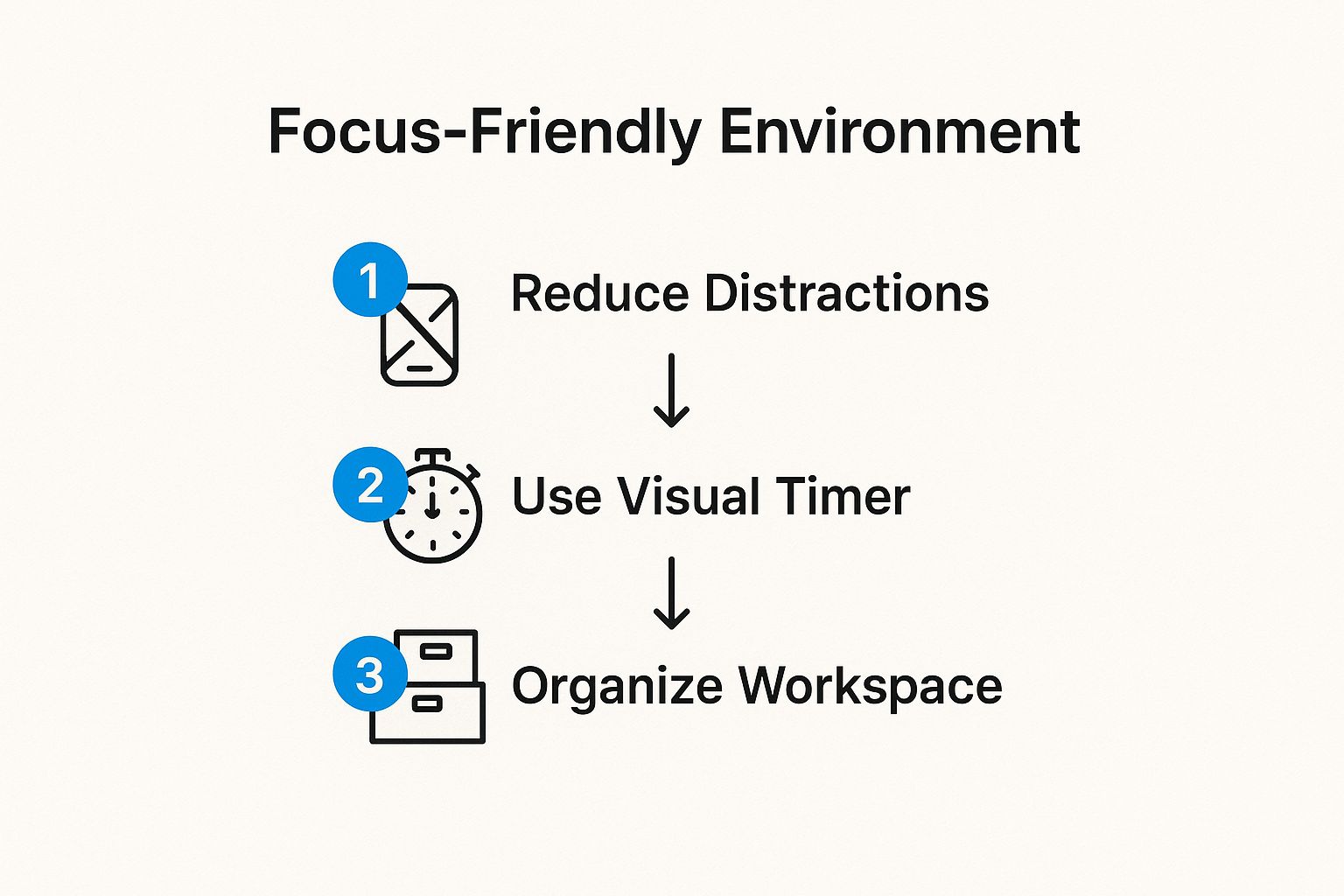
As you can see, a big part of the battle is fought before you even start the work. It’s about clearing distractions, using simple tools like timers, and keeping things organized.
My Two Cents: The best strategies are the ones you actually stick with. Don't be afraid to mess with the formula. Try different timer lengths, group tasks in weird ways, and find the little habits that click for your brain.
Sometimes, the hurdle isn't the task itself, but the long list of instructions that comes with it. A wall of text can feel just as paralyzing as a complex project. This is a perfect spot for assistive tech to step in.
Instead of staring at a list and feeling overwhelmed, have an app read it aloud to you.
Hearing one step at a time lets you focus on what's right in front of you, stopping your brain from spiraling about all the things that come next. For even more practical strategies to focus better and reclaim your attention, an auditory approach can really simplify things and make it easier to just start.
How Technology Can Help You Concentrate
Technology gets a bad rap for being a distraction machine. And sure, it can be. But when you use it the right way, it can also be one of the best tools in your corner for managing ADHD. Think of your phone not as the enemy of focus, but as a personalized assistant that supports how your brain works.
This is a game-changer when you're facing a wall of text. For anyone with ADHD, staring down a dense page in a textbook or a long-winded email can feel completely draining. The sheer effort of just decoding the words sucks up all the mental energy you need to actually understand what you're reading.
That’s where assistive technology really steps up.

With a clean, simple interface, you can take those overwhelming documents and turn them into audio you can actually process. Making that simple switch from reading to listening can completely change the way you absorb information.
From Overwhelmed Reader to Engaged Listener
Think about it. You could be listening to a required chapter for class while you fold laundry, or catching up on meeting notes during a walk. Text-to-speech apps let you take in information in a way that often clicks better with an ADHD brain that thrives on a bit more stimulation.
By turning words on a page into audio, you can:
Cut down on mental friction. You get to skip the exhausting task of forcing your eyes to stay focused on static text.
Engage multiple senses. Listening while doing something else can make learning feel more dynamic and help the information stick.
Actually multitask. Pairing listening with a simple physical task can keep your body busy, freeing up your mind to learn.
This method lines up perfectly with how so many of us with ADHD learn best. It really breaks down why auditory learning can make such a huge difference.
Building Better Routines with Digital Tools
Technology isn’t just for consuming information; it's also brilliant for building the consistent routines that are crucial for focus. We know structure is key for managing ADHD, but actually sticking to that structure is the hard part. That's where habit-building apps can make a real impact.
The best tools are the ones that fit right into your life without a fuss. They provide the external structure that the ADHD brain often craves, making it easier to stay on track.
You can use technology to create real, lasting behavioral change. For instance, using habit tracking apps helps you build simple, repeatable routines into your day. They send you reminders and celebrate your progress, giving you those little dopamine hits that keep you going.
Ready to see how turning text into audio can make focusing feel easier? Download Speak4Me free on iOS and turn your next reading slog into an engaging listening session.
Get Moving: Why Breaks Are Your Secret Weapon for Focus
Forget everything you’ve been told about sitting perfectly still to concentrate. For anyone with an ADHD brain, that advice is not just outdated—it’s counterproductive.
Forcing yourself to stay glued to a chair when your mind is screaming for a change of scenery often makes things worse. You get restless, antsy, and even less focused than before. The reality is that movement isn't the enemy of focus; it's one of your most powerful tools for it.
A little physical activity can do wonders. It gets the blood flowing and helps kickstart crucial neurotransmitters like dopamine, which plays a huge role in motivation and attention. That antsy feeling you get? That's your brain telling you it needs a quick reset to stay in the game.
Smart Ways to Weave Movement into Your Day
You don't need to stop everything for a full-blown gym session. The trick is to find small, easy ways to move that feel natural and don't completely derail your workflow. These short "brain breaks" can make a world of difference.
Here are a few ideas that work:
Try some simple desk stretches. A few neck rolls, shoulder shrugs, or wrist stretches can help release tension and give your mind a quick breather without you even having to leave your chair.
Take a five-minute walk. Set a timer for once an hour and just get up. Walk to the kitchen, do a lap around the house, or step outside for some fresh air. It’s a simple reset button.
Consider a standing desk. If you have the option, switching between sitting and standing is a fantastic way to keep your body and mind more active and engaged all day long.
This isn't about giving in to distraction. It's about proactively managing your brain's need for stimulation to stay sharp. Think of it as a strategy, not a weakness.
As awareness of ADHD grows, especially in the United States, so does the understanding that old-school methods just don't work for everyone. Modern, more flexible strategies are taking hold.
Combine Movement with Learning
Now, here’s where you can really get strategic. What if you could get your work done while you move? This is a fantastic way to satisfy your brain's need for physical activity and mental input at the same time.
Instead of chaining yourself to a desk to read that long, dense report, why not listen to it? Using an app to convert text to audio frees you up to walk around, stretch, or even tidy up your workspace while you absorb the information.
With Speak4Me, you can turn any document into clear audio, making it easy to learn on the move. It’s a simple but effective way to stay focused by giving your brain exactly what it needs: something to do and something to think about.
Ready to make your breaks more productive? Download Speak4Me free on iOS and see how listening can help you stay on track while you move.
Got Questions About ADHD and Concentration? Let's Talk.
If you're figuring out how to manage ADHD and concentration, you've probably got a lot of questions. It's a common experience. Let's walk through some of the big ones with real, practical answers.
How Can I Improve My Concentration, Like, Right Now?
If you need a quick win, start small. Seriously. Forget about a massive life overhaul—that's a recipe for burnout.
First thing: clear your desk. Get rid of everything that isn't essential for what you're doing right this second. It’s amazing how much "visual noise" can pull your focus away. Then, try a mini-Pomodoro session. Forget the standard 25 minutes; aim for just 15 or 20 minutes of focused work, followed by a 5-minute break. This small change can feel instantly more manageable.
I Still Get Distracted. What Am I Doing Wrong?
Nothing. Getting distracted is just part of the deal with an ADHD brain. The goal isn't to eliminate distractions entirely—that's impossible. It's about getting better at noticing when your mind has wandered and gently guiding it back.
The moment you realize you're off-task, take a breath. Don't beat yourself up. A simple, "Okay, we're back," is all you need. This is where tools can act as an anchor. Setting a timer or having an app like Speak4Me read a document aloud gives your brain a specific thing to return to when you get sidetracked.
Is There a "Best" Time of Day for Me to Concentrate?
Absolutely, and finding yours is a game-changer. Most of us with ADHD have certain times of day—our "focus windows"—where our brains are just on. It could be first thing in the morning or late at night. The key is to start paying attention to your own natural energy cycles.
Once you figure out when your peak times are, guard them fiercely. Schedule your most important or mentally taxing work for those windows. The low-energy tasks? Save those for when you're feeling a bit more sluggish. It’s so much easier to work with your brain's rhythm instead of constantly fighting against it.
This is one of the most powerful things you can do for yourself. You're not just trying to have one good day; you're building a sustainable system that honors how your brain actually works.
Can an App Like Speak4Me Actually Help My Focus?
It really can. For a lot of us, staring at a wall of text is a massive cognitive drain. It’s not just boring; it’s genuinely exhausting and a huge hurdle for concentration. This is where assistive technology like Speak4Me comes in.
Instead of forcing yourself to read, you can listen. Speak4Me converts all that text into audio, which assists you in absorbing information in a way that might feel way less demanding. You can process that dense report while you pace, doodle, or do something else with your hands. It’s a simple but incredibly effective way to play to your brain's strengths.
Ready to stop fighting with text? Give your eyes—and your brain—a break. Download Speak4Me free on iOS and see how much easier it is to stay focused when you can just listen.
Try Speak4Me for Free
