A Guide to Text to Speech Voices
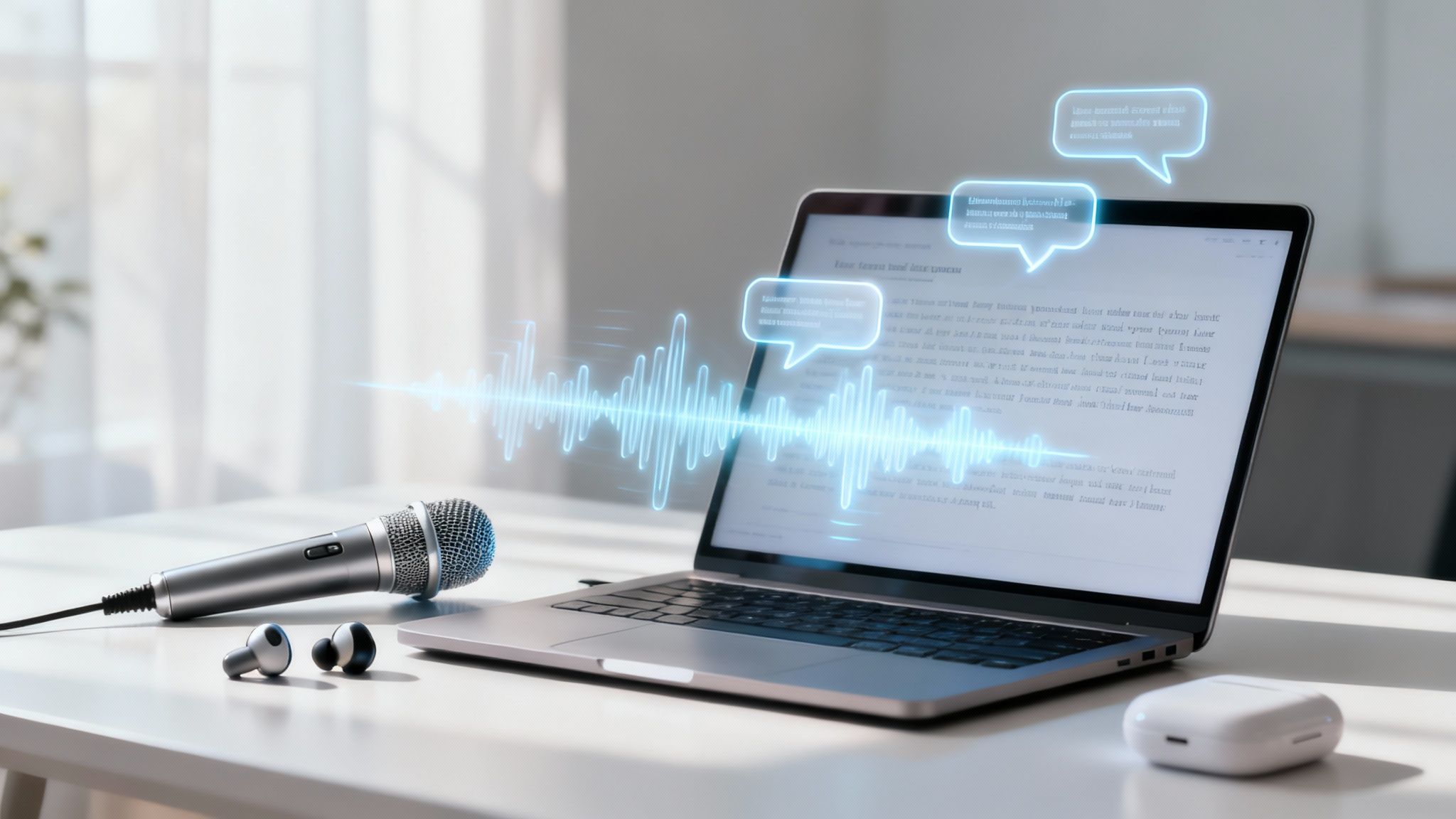
Think of text-to-speech voices as a personal narrator for your digital life. They take the written words on your screen—from articles, documents, or websites—and turn them into clear, spoken audio. It’s like having an audio translator that reads everything aloud for you.
Understanding the World of TTS Voices
At its heart, text-to-speech (TTS) is all about making information easier to get to and more convenient to consume. It closes the gap between reading a screen and simply listening, letting you take in content without being glued to your device.
The robotic, clunky computer voices of the past are long gone. Today's text to speech voices are powered by sophisticated artificial intelligence, resulting in audio that is incredibly natural and expressive. These systems can grasp context, rhythm, and the subtle ups and downs of human speech, which makes for a genuinely smooth and engaging listening experience. This leap in quality has taken TTS from a niche accessibility feature to a go-to tool for anyone looking to be more productive.
From Function to Fluidity
The original goal of TTS was always accessibility, and that remains a huge part of its purpose. For the roughly 2.2 billion people worldwide living with some form of vision impairment, TTS is an absolute game-changer, opening up a digital world that might otherwise be out of reach.
But the benefits of high-quality TTS voices now extend to everyone. They can help you:
Boost Productivity: Catch up on emails, reports, or articles during your commute, at the gym, or while doing chores around the house.
Improve Learning: Listening to study materials while reading them is a proven way to help information stick.
Reduce Screen Fatigue: Give your eyes a much-needed break from long articles and documents by switching from reading to listening.
TTS technology unlocks a more flexible way to interact with information. It’s not just about hearing words; it's about understanding them more efficiently, no matter where you are or what you're doing.
This technology is just one piece of a much larger puzzle of AI-powered applications designed to support our lives. If you want a bigger picture of where tools like this fit in, you can explore the AI Tools Brief platform.
How Modern TTS Voices Actually Work
The secret behind today's incredibly lifelike text to speech voices isn't some kind of wizardry—it's a brilliant combination of data science and artificial intelligence. The technology has evolved light-years beyond the choppy, robotic voices of the past.
The old-school method was called concatenative synthesis. Imagine trying to build a sentence by cutting out individual words from different magazines and pasting them together. That’s basically how it worked. A computer would piece together pre-recorded words and sounds, but the final result always sounded a bit… off. It lacked the smooth, natural rhythm of real conversation.
The Neural Network Revolution
Today’s TTS systems are built on an entirely different foundation: neural networks. Instead of just stitching audio clips together, these modern systems actually learn how to speak. They analyze huge libraries of human speech and its corresponding text, picking up on the subtle patterns of rhythm, tone, and emotion.
Think of it as the difference between a robot reading a script and an actor performing it. The AI doesn't just see words; it learns to understand:
Prosody: The natural ebb and flow of a sentence.
Intonation: The way your voice goes up at the end of a question.
Emphasis: Which words need a little extra punch to get the meaning across.
The voice you hear is generated completely new, from the ground up, capturing the tiny details that make speech sound human. That's why neural voices are so clear and engaging.
To really get what's happening under the hood, it helps to understand the basics of deep learning and machine learning. These concepts are the powerhouse behind the AI, teaching it to create speech that's nearly impossible to tell apart from a real person. We also have a great guide that dives into what makes for truly natural-sounding text to speech.
The Growing Demand for Quality Voices
This huge leap in quality has kicked off a massive surge in the industry. The global Text-to-Speech market hit a value of around USD 4.55 billion in 2024 and is climbing fast. This growth is all about making synthesized voices that are not just understandable, but genuinely pleasant to listen to.
This ongoing improvement means the voices you use in an app like Speak4Me are constantly getting smarter and more natural, making everything from news articles to study guides a much better listening experience.
Comparing Different Types of TTS Voices
Not all text to speech voices sound the same, and figuring out the differences is the first step to finding the right one. The technology comes in a few flavors, each with its own strengths. It's not just about a voice being understandable; it’s about making it enjoyable to listen to.
Think of it like the evolution of digital cameras—we went from grainy, basic point-and-shoots to the stunningly clear cameras we carry in our pockets today. TTS voices have followed a similar path, with the main types being Standard, Neural, and Custom.
Standard Voices: The Foundation
Standard voices, sometimes called concatenative voices, are the classic approach to TTS. They work by literally cutting and pasting tiny snippets of pre-recorded human speech to build words and sentences. Imagine a massive audio library of every sound a person can make, and the system just grabs the pieces it needs to match the text.
While these voices get the job done—they’re clear and intelligible—they often have that tell-tale robotic sound. The rhythm can feel a bit off because the system is just assembling parts, not truly understanding the natural flow of a sentence. This makes them a decent fit for simple, functional tasks where clarity is the only thing that matters, like an automated phone menu or a basic screen reader.
Neural Voices: The Modern Standard
This is where AI really changes the game. Neural voices generate audio from the ground up, creating speech that sounds remarkably human. Instead of just stitching together old recordings, a neural network learns the subtle patterns, intonations, and rhythms of natural human speech.
The result? The voice sounds expressive and fluid. This makes it perfect for longer content like news articles, online courses, and audiobooks where you'll be listening for a while. The difference is night and day; the experience is far more engaging and way less tiring on the ears. It's precisely why apps like Speak4Me focus on delivering top-notch neural voices.
This infographic gives a great overview of how the different voice types stack up.
As you can see, each type builds on the last, with neural voices representing a huge leap forward in quality and naturalness.
Custom Voices: The Personalized Experience
Custom voices take neural technology one step further by creating a completely unique voice for a specific brand or person. This process involves training an AI model on recordings from one individual, resulting in a one-of-a-kind digital voice. You might see this used for brand mascots, proprietary virtual assistants, or specialized applications that need a signature sound.
While custom voices offer incredible personalization, they come with a significant investment of time and money. For most people, the wide variety of excellent neural voices already available provides more than enough high-quality options for any project.
To help you decide, this table breaks down the key differences between the voice types.
Comparison of Text to Speech Voice Types
This table breaks down the key differences between Standard, Neural, and Custom TTS voices to help you choose the best option for your needs.
Voice Type | Key Characteristic | Best For | Example Use Case |
|---|---|---|---|
Standard | Clear but often robotic; assembled from audio clips | Simple, functional tasks where clarity is the main goal | Automated phone systems, basic alerts |
Neural | Fluid, natural, and expressive; AI-generated speech | Long-form content, engaging user experiences, accessibility | Audiobooks, e-learning, voiceovers |
Custom | Unique and brand-specific; trained on a single voice | Creating a distinct brand identity or a personal digital voice | Branded virtual assistants, mascots |
Ultimately, the goal is to find a voice that fits what you're trying to do. For most modern applications, a high-quality neural voice offers the perfect balance of realism and accessibility.
Don't settle for robotic voices. Explore a library of natural, high-quality neural voices that make listening a pleasure. Download Speak4Me free on iOS and find your perfect voice.
Everyday Uses for Text to Speech Voices
The tech behind text to speech voices is fascinating, but where it really shines is in our day-to-day lives. TTS isn't just for niche applications anymore; it's become a go-to tool for making life a little more efficient and accessible for just about everyone.
Whether you're a busy professional juggling tasks or a student buried in textbooks, people are finding clever ways to make TTS work for them. The big win is simple: it frees you from your screen. This small shift opens up a world of possibilities for multitasking and taking back your time.
Boosting Your Productivity
One of the best things about TTS is its ability to turn downtime into productive time. Think about your commute, your workout, or even just doing chores around the house. That time doesn't have to be dead air.
Catch Up on Emails: Have your inbox read to you while you make breakfast or walk the dog. You can show up to work already knowing what the day holds.
Review Documents Hands-Free: Listen to reports, articles, or project briefs while you're driving or on the treadmill. It's an easy way to stay in the loop without stopping what you're doing.
Proofread Your Own Writing: This is a game-changer. Hearing your own words read back to you helps you catch clunky phrases, typos, and other errors that your eyes just skim over.
This hands-free approach means you're absorbing more information without having to carve out dedicated reading time. You're essentially layering tasks, which feels like finding extra hours in the day. If you're ready to give it a try, you can find some of the best TTS tools for speaking from text and see how they fit into your routine.
Making Learning More Flexible
For students and anyone committed to lifelong learning, TTS is an incredibly powerful study partner. It’s especially useful for auditory learners—people who absorb information best by hearing it.
When you listen to your study materials, you're engaging a different part of your brain. This can seriously boost focus and help you remember things more clearly. It turns reading from a passive activity into an active listening session.
Imagine turning dense textbook chapters, research papers, or your own lecture notes into audio files. You could prep for a big exam while going for a run or doing the dishes. It’s a fantastic way to accommodate different learning styles and make heavy academic content feel much more manageable.
A Powerful Tool for Accessibility
Beyond pure convenience, TTS is first and foremost a critical accessibility tool. It can assist people with visual impairments, reading everything from websites and news articles to personal messages. It helps grant a level of independence that can be truly empowering.
It's also a huge help for individuals with reading difficulties like dyslexia. By converting text to audio, TTS helps lower the cognitive strain that can come with reading, making it easier to understand and retain information without the frustration.
The uses for TTS just keep growing. For example, the auto industry is quickly integrating TTS into in-car systems, with the market expected to grow by about 14.8%. The push is all about creating safer, hands-free ways to interact with technology while on the road.
Unlock your productivity and make learning easier. From hands-free reading to accessibility support, discover what TTS can do for you. Download Speak4Me free on iOS to transform how you consume content.
How to Choose the Right TTS Voice for You
Picking the right text to speech voices can be a game-changer. It’s the difference between a robotic, clunky experience and something that’s actually enjoyable to listen to. The perfect voice isn't just about being clear; it's about finding one that fits the material and, most importantly, fits you.
Think about it like casting a narrator for an audiobook. The voice you’d want for a fast-paced thriller is totally different from the one you’d pick for a dense history book. The goal is to find a voice that makes the content come alive and easy to process, whether you're listening for a few minutes or a few hours.
Consider the Context
First things first: what are you actually listening to? Different materials just sound better with different vocal styles. A warm, conversational voice might be perfect for catching up on your favorite blogs, but a crisp, authoritative tone is probably better for work reports or study materials.
To get started, ask yourself a few questions:
What’s the vibe of the content? Is it a serious academic paper, a casual news article, or an entertaining story?
How long is the listening session? For a long commute or study session, you’ll want a voice that’s smooth and won’t cause listening fatigue.
What am I trying to accomplish? Are you quickly scanning for information, deep-diving into a complex topic, or just kicking back with a good read?
A voice that feels right for the content can seriously boost your focus and understanding. It’s the difference between just hearing words and actually connecting with the message.
Fine-Tuning Your Experience
Once you've figured out the general tone you're after, it's time to dive into the details. Most good TTS apps give you a surprising amount of control over how the audio sounds.
You can almost always tweak settings like speed and pitch to get them just right. A lot of people find that bumping up the reading speed a little bit actually helps them concentrate. Adjusting the pitch can also make a voice feel more natural or comfortable over time. The best advice is simply to play around with the settings and see what works for you. If you want a detailed walkthrough, our guide on how to change voices in Speak4Me is a great place to start.
The right voice makes all the difference. We make it easy to find the perfect one for your articles, books, and notes. Download Speak4Me free on iOS and customize your listening experience.
Where Are Text-to-Speech Voices Headed?
The evolution of text-to-speech voices is sprinting towards a future where talking to our devices feels as natural as talking to a friend. We're quickly blurring the line between human and synthesized speech, which is opening up some fascinating new ways for us to interact with the world around us.
Soon, AI voices won't just sound human—they'll feel human. Imagine an audiobook narrator that sounds genuinely thrilled during a chase scene or a support message that conveys real empathy. This is the next frontier: not just mimicking human speech, but connecting with the listener on an emotional level.
Audio That's Personal and Uncannily Real
We're also on the verge of creating hyper-realistic audio that is virtually impossible to tell apart from a live human speaker. This means our digital assistants and narrators will finally shed that generic, robotic feel and start sounding like unique individuals.
A few key trends are driving this change:
Real-time Voice Cloning: Think about creating a digital assistant that sounds exactly like you, or designing a completely new voice from scratch. This technology is making it possible.
Contextual Awareness: In the near future, voices will be smart enough to understand the context of what they're reading. They'll automatically know to sound serious for a news report and lighthearted for a funny story.
Proactive Assistance: Voices will do more than just read. They'll start anticipating what you need, maybe offering a quick summary of a long article before you even ask.
The ultimate goal here is to build a seamless bridge between people and technology. We're aiming for communication that's fluid, intuitive, and genuinely helpful, making information more accessible and engaging for everyone.
Keeping up with these changes means you'll always have access to the best possible listening experience as the technology continues to get better.
Don't just read about the future of audio—hear it for yourself. Get access to the latest text-to-speech technology and listen to voices that are more human than ever. Download Speak4Me free on iOS today!
Still Have Questions About TTS Voices?
Let's clear up a few common questions that pop up when people start exploring text-to-speech. Think of this as your quick-reference guide to the essentials.
Are Text to Speech Voices Free?
You bet. Many TTS apps, including Speak4Me, give you access to incredibly high-quality voices completely free of charge. It's a great way to dive in and hear for yourself what the technology can do without spending a dime.
Of course, if you find you need more advanced capabilities or want to explore an even wider range of premium neural voices, there are usually optional upgrades. This way, you only pay for extra features if you actually need them.
Can I Change How a TTS Voice Sounds?
Absolutely. The best text-to-speech tools put you in the driver's seat. You can easily adjust the reading speed, slowing it down for complex material or speeding it up to breeze through an article.
You can also tweak the voice's pitch—raising or lowering it until it sounds just right to your ears. These simple controls are key to making the listening experience feel truly personal and comfortable.
What’s the Most Realistic-Sounding TTS Voice?
For the most human-like experience, you’ll want to look for what are called neural voices. These aren't your old-school, robotic-sounding computer voices. They're built with sophisticated AI that has been trained to mimic the subtle rhythms, intonations, and pauses of a real person talking.
While the "best" voice is always a matter of personal taste, neural voices are consistently the top performers for natural, engaging audio. They make long-form content like articles and audiobooks a genuine pleasure to listen to.
Got more questions? The best way to find answers is to try it out. Speak4Me lets you explore all these features and find a voice that works perfectly for you.
Try Speak4Me for Free
