What Is Inclusive Education and Why It Matters

Inclusive education is a philosophy built on a simple, powerful idea: every student belongs in the same classroom. It means that children, regardless of their abilities, challenges, or backgrounds, learn together in a supportive environment.
This isn't about just physically placing a student with different needs in a standard classroom and hoping for the best. It’s about redesigning the classroom itself—the teaching methods, the materials, the very culture—to ensure every single child can thrive.
What Inclusive Education Really Means
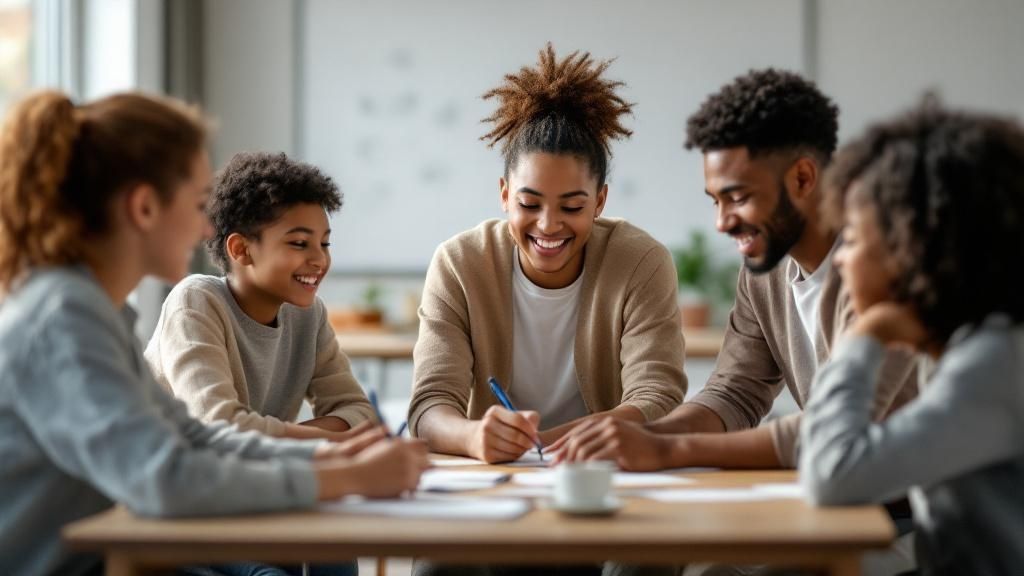
Let's cut through the jargon. Inclusive education is more than a policy or a program; it's a fundamental belief that every student has a right to be there.
Think of it like building a universal playground. Instead of having separate, "special" equipment off to the side, you design the entire playground from the start so that a child in a wheelchair can use the same structures as a child who loves to climb. The focus shifts from what a child can't do to how the environment can be made to work for everyone.
Shifting Perspectives and Practices
This isn't just a local trend. The push for inclusion is global, guided by goals like Sustainable Development Goal 4 (SDG 4), which calls for equitable quality education for all. But turning that vision into reality is tough. As of 2020, only about 10% of countries had laws that fully supported inclusion in education.
When we get it right, the benefits extend to every student. The classroom becomes a richer, more vibrant place where different ways of thinking are celebrated as assets. It forces educators to be more creative and flexible, which ultimately makes their teaching better for everyone.
Inclusive education is the foundation of a society that values every individual. It teaches empathy, resilience, and collaboration from the earliest age, preparing all students for a world where diversity is the norm, not the exception.
Of course, getting there involves exploring a range of strategies, including the role of empowering special needs learners through dedicated schools within the broader ecosystem of support.
Technology as a Bridge to Inclusion
Today, technology gives us incredible tools to make inclusion a practical reality. Assistive communication tools, for example, are essential for ensuring every student has a voice. They level the playing field, allowing students who struggle with verbal communication to share their ideas and participate fully.
Apps like Speak4Me can be a game-changer, helping to break down communication barriers so students can ask questions, work with classmates, and show what they know. This is how we build a truly equitable classroom—one where every single voice is heard and valued. To help a student find their voice, download Speak4Me free on iOS.
The Pillars of a Truly Inclusive Classroom
Turning the big idea of inclusion into something that happens every day in a real classroom takes a solid foundation. An inclusive classroom isn't an accident; it's built on purpose, using smart strategies that create a flexible and supportive space for every single student. The whole point is to adapt the environment to the learner, not the other way around.
The two most important pillars holding this all up are Universal Design for Learning (UDL) and differentiated instruction.
Universal Design for Learning: The Blueprint for Access
Think of UDL as the architectural blueprint for your classroom. When an architect designs a building with ramps and elevators from the very beginning, everyone can access it. UDL does the same thing for learning. It's about designing lessons with multiple ways for students to engage, understand the material, and show what they've learned.
This forward-thinking approach gets rid of roadblocks before they can even become an issue. For example, instead of just assigning a chapter to read, a UDL-inspired lesson might give students the choice to read the text, listen to an audio version, or watch a video on the same topic. This isn't just a bonus for students with diagnosed learning disabilities—it helps everyone by respecting that people learn in different ways.
Differentiated Instruction: The Custom-Fit Approach
If UDL is the blueprint, then differentiated instruction is like the custom interior design. This is where a teacher fine-tunes their methods to fit the unique needs of each student in the room. It’s all about making small, intentional adjustments.
A teacher might change up the complexity of a task, offer different levels of support, or let students show what they know in various ways. For instance, during one math class, you might see some students using physical blocks to grasp a new concept, while others are ready to tackle more abstract problems on a worksheet. The learning goal is the same for everyone, but the journey to get there is personalized.
This ensures every child feels both challenged and supported. You can see more examples of how this works by exploring our resources on inclusive practices in education.
This image shows what happens when these principles come to life—teachers guiding diverse learners to work together effectively.
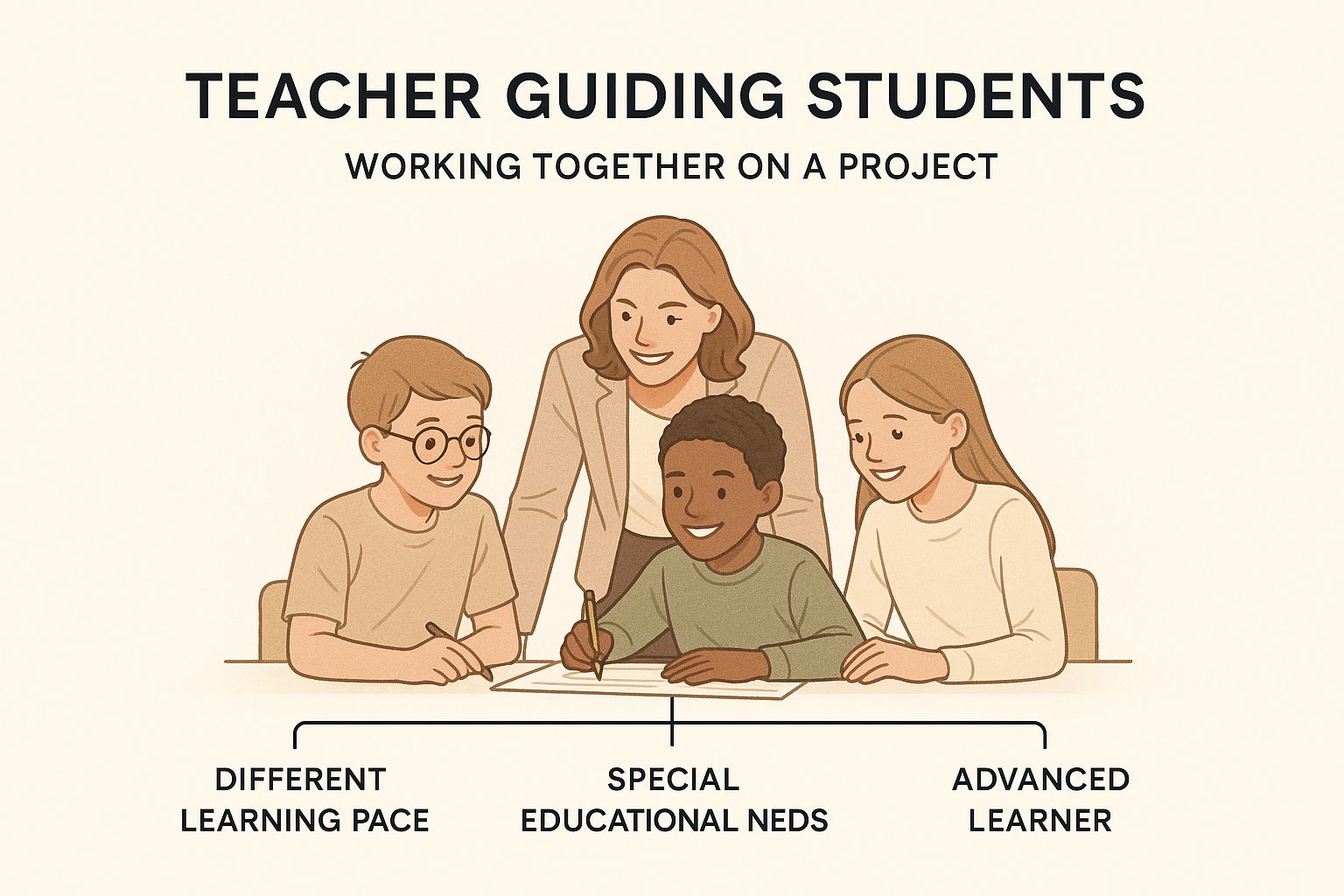
As you can see, a supportive and well-designed environment is what fuels real engagement and teamwork among all students.
The table below breaks down these core ideas a bit further, showing what they actually look like day-to-day.
Core Principles of Inclusive Education in Practice
Principle | What It Means for Students | Classroom Example |
|---|---|---|
Equitable Access | Every student has the tools and opportunities they need to access the curriculum and participate fully. | Providing both audiobooks and physical texts for a novel study. |
Individual Strengths | The focus is on what students can do, building on their unique talents and interests. | Allowing a student who excels at art to create a comic strip to demonstrate their understanding of a historical event. |
Community and Belonging | All students feel like valued, respected members of the classroom community. | Starting the day with a morning meeting where every student has a chance to share. |
Collaborative Culture | Students learn to work with and support peers who have different abilities and backgrounds. | Using flexible grouping for projects so students work with a variety of classmates throughout the year. |
Ultimately, both UDL and differentiation empower students by recognizing and responding to their individuality. It’s a shift from a one-size-fits-all model to one that celebrates diversity.
How Inclusion Lifts Every Student Up
There’s a common myth that inclusive education is a one-way street, set up only to help students with disabilities. The reality is so much bigger than that. An inclusive classroom creates a rising tide that lifts everyone, building a stronger academic and social foundation for the entire school community.
When you design a classroom to support its most diverse learners, every single student reaps the rewards of that thoughtful, compassionate environment.
For students with unique learning needs, the benefits are obvious and powerful. They aren't isolated in a separate room; instead, they are active, visible members of their school. That feeling of belonging is a huge motivator and has a direct line to how well they engage and perform in their studies.
But the good news doesn't end there. When students of all abilities learn and grow together, it naturally breaks down stereotypes and fosters real understanding. It turns the classroom into a place where differences are just a normal part of life, not something to be feared or pushed aside.
Social and Emotional Growth for All
One of the best things to come out of inclusive education is how it helps all students develop critical life skills. Their peers without disabilities learn empathy, patience, and how to think on their feet by working alongside classmates who might communicate or solve problems differently.
This isn’t just theory; it’s practiced every single day. Students figure out how to collaborate with friends who need a bit of extra help, organically stepping into leadership and mentoring roles.
In an inclusive setting, students learn that everyone has unique strengths and challenges. This understanding is the foundation for building a more compassionate and cooperative society, long after they leave the classroom.
This kind of social development is also tied directly to academic success. It's simple: classrooms built on respect and mutual support see less bullying and higher engagement from everyone involved.
Academic Advantages in an Inclusive Environment
To make a classroom truly inclusive, teachers often have to pull from a bigger toolbox of teaching strategies—and that variety benefits everyone. Methods like hands-on projects, visual aids, and small group work are often brought in to support specific students, but they end up making the lessons more interesting and stickier for the whole class.
Put simply, the need to communicate clearly and effectively with every learner raises the bar for teaching quality. This richer educational setting helps all students grasp the material on a much deeper level.
Unfortunately, the need for inclusion is still incredibly urgent. A recent analysis found that children with disabilities are 49% less likely to have ever attended school, which points to a massive gap in basic educational access. You can discover more about these educational inequalities and see just how vital this work is.
Closing these gaps takes the right tools. When every student has a way to share their thoughts, the entire class gets smarter and more connected. Assistive communication tools like Speak4Me are key to building these positive bonds, ensuring no voice goes unheard. You can help create a more connected classroom today; Download Speak4Me free on iOS.
Tackling the Real-World Hurdles to Inclusion
Putting inclusive education into practice is a journey, not a destination. While the ideal is clear, schools and teachers often run into some very real and significant roadblocks. These aren't small bumps in the road; they're often deep-seated issues ranging from old-fashioned attitudes to the very practical problems of tight budgets and a lack of specialized training.
The goal isn't to just list what's wrong. It's about finding workable solutions for parents, educators, and everyone involved. Real change happens when we face these challenges head-on and start chipping away at them together.
Facing the Systemic Challenges
One of the toughest barriers to break down is an outdated way of thinking. This might be the subtle belief that some kids just "belong" in a separate classroom or a general reluctance to move away from traditional teaching styles. These mindsets can be tricky to navigate, especially when it comes to things like addressing unconscious bias and innovation inequality, which can quietly shape how a teacher interacts with different students.
Then, there's the ever-present issue of money. Many schools are strapped for cash and simply can't afford essential resources. This could be anything from assistive technology and adaptive classroom materials to hiring more support staff. This funding gap often leaves passionate teachers feeling stressed and unequipped to give every student the support they deserve.
The path to inclusion isn't about finding a perfect, obstacle-free route. It’s about building the right tools, nurturing the right mindset, and taking steady steps to clear the way for every single student.
The scope of this problem is massive. Worldwide, a staggering 272 million children are not in school. On a more hopeful note, a global analysis showed that nearly 67% of educational partnerships in developing countries are now specifically focused on getting children with disabilities into the classroom. This shows a real shift in commitment. You can learn more about these global education data highlights to see how the world is pushing for change.
How Technology Offers a Practical Way Forward
This is where technology can be a game-changer. Modern tools can step in and help close many of these gaps without needing a massive budget. Assistive apps, for example, can offer critical support to students, taking some of the pressure off limited school funds.
Think about a student who struggles to communicate. This is a fundamental barrier to learning and socializing, but technology offers an immediate solution. Tools like Speak4Me can literally give a child a voice in the classroom. It helps them join discussions, work on projects with friends, and show what they know. When we provide an accessible way for every child to communicate, we're knocking down one of the biggest walls to true inclusion.
Empower a student to be heard. Download Speak4Me free on iOS.
How Technology Makes Inclusion Possible
Let's be honest, the big ideas behind inclusive education can feel a little abstract. How do you actually do it in a real classroom? Technology is often the bridge that connects the philosophy to the practical, day-to-day reality.
For a lot of students, assistive technology (AT) is the key that unlocks the door. It’s what allows them to get into the lesson, work with their friends, and show what they know in a way that truly fits them. These tools are all about leveling the playing field, making sure every student starts from a fair place.
Giving Every Student a Voice
One of the biggest game-changers is in communication. Imagine being full of ideas but struggling to get them out. For students who are non-verbal or find spoken language difficult, Augmentative and Alternative Communication (AAC) tools are absolutely essential. This could be a simple picture board or a sophisticated app on a tablet.
A perfect example is an app like Speak4Me. It literally gives a student a voice to share their thoughts during a discussion, ask a question when they're stuck, or just joke around with a classmate at recess. Being able to communicate on their own terms is huge for building confidence and making real social connections. It’s what helps them be an active part of the class, not just a bystander.
You can learn more about how text-to-speech assists neurodivergent students in our detailed guide.
Technology's greatest contribution to inclusive education is its ability to foster independence. When students are given the right tools, they are empowered to take ownership of their learning, moving from passive recipients of information to active creators of their own success.
Building a More Flexible Classroom
Beyond just communication, technology helps teachers create learning environments that can bend and adapt to whoever is in the room. Digital tools make it so much easier to tweak materials to fit different needs, which is the heart of inclusive education.
Here are a few ways this plays out:
Customizable Texts: Think about digital books. A student with dyslexia or a visual impairment can instantly change the font size, background color, or spacing to make it readable for them.
Speech-to-Text Software: For students who struggle with the physical act of writing, this is a lifesaver. They can just speak their essay or their answer, letting their ideas flow without getting caught up in the mechanics.
Interactive Learning: Educational apps can turn a dry topic into an engaging game or a visual simulation, which is great for grabbing the attention of students who learn in different ways.
This resource on effective technology integration in classrooms has some great ideas if you want to dig deeper. When you thoughtfully weave these tools into your teaching, you build a classroom where every single student has what they need to thrive.
Ready to help a student find their voice and completely change their school experience? Take the first step. Download Speak4Me free on iOS and see for yourself how powerful the right tool can be.
Taking Your First Steps Toward an Inclusive Classroom
Getting started with inclusive education can feel like a huge task, but it doesn't have to be. It’s not about overhauling the entire system overnight. Instead, it’s about taking that first small, deliberate step.
For parents, teachers, and even community members, that first move is often the most important. It could be as simple as starting a conversation with a teacher about different learning styles, or maybe just doing your own research into what an inclusive classroom actually looks like in practice. The key is to just begin.
How to Take Action Today
Building a truly welcoming learning environment is a team effort. Here’s a quick checklist to help you get started on this important path, no matter what your role is:
Start a Conversation: Reach out to your school’s principal or Parent Teacher Association. Ask them about their vision for inclusion and share what you’ve learned. A simple question can spark a much bigger movement.
Explore New Teaching Methods: Look into strategies like Universal Design for Learning (UDL). You'd be surprised how small tweaks in presenting information can unlock a student's potential.
Embrace Assistive Technology: Get familiar with tools that help students work around their specific learning challenges. For example, learning how text-to-speech apps help students with dyslexia is a fantastic starting point.
Push for Professional Development: Encourage your local school district to invest in training for all staff. When everyone is on the same page, the students are the ones who benefit most.
The biggest changes often start with a single, focused goal. Picking one area to start with—whether it's better communication, accessible materials, or curriculum changes—makes the process feel less overwhelming and leads to real, tangible progress.
One of the most powerful things you can do right away is to give a child a tool that helps them express themselves and truly take part in their own education. When a student finally has their voice heard, their whole world can change.
Help make a difference in a student's life right now. Download Speak4Me for free on iOS and give them a voice.
Frequently Asked Questions
Navigating inclusive education can spark a lot of curiosity. Clearing up common misconceptions helps everyone feel more confident about this approach. Below are answers to some of the most frequently asked questions.
Does Inclusive Education Lower Academic Standards
It’s easy to assume that mixing learners with different needs will water down the curriculum—like thinking a fruit salad dilutes the flavor of each fruit. In reality, Universal Design for Learning (UDL) strategies act like a custom recipe, giving every student the right blend of support.
Studies consistently report academic gains for all learners when teachers use varied, flexible methods. In short, inclusion doesn’t lower standards; it often raises the bar.
What Is The Difference Between Inclusion And Integration
Here’s a quick way to spot the difference:
Integration
You seat a student in the existing setup and expect them to adapt to the classroom as it is.Inclusion
You reshape the classroom to fit every learner from day one, making sure each person truly belongs.
“Inclusion changes the system itself; integration expects the student to change.”
Is Inclusive Education Only For Students With Disabilities
Not at all. Think of a classroom as a community garden filled with diverse plants—language backgrounds, cultural experiences and learning styles. Inclusive education means tending to every seed, celebrating what each one brings to the table.
When every student feels valued, the whole classroom thrives.
At Speak4Me, we believe every student’s voice adds value to the classroom conversation. Give a child the tool they need to fully participate in their education. Download Speak4Me free on iOS and help a student share their unique perspective.
Try Speak4Me for Free
